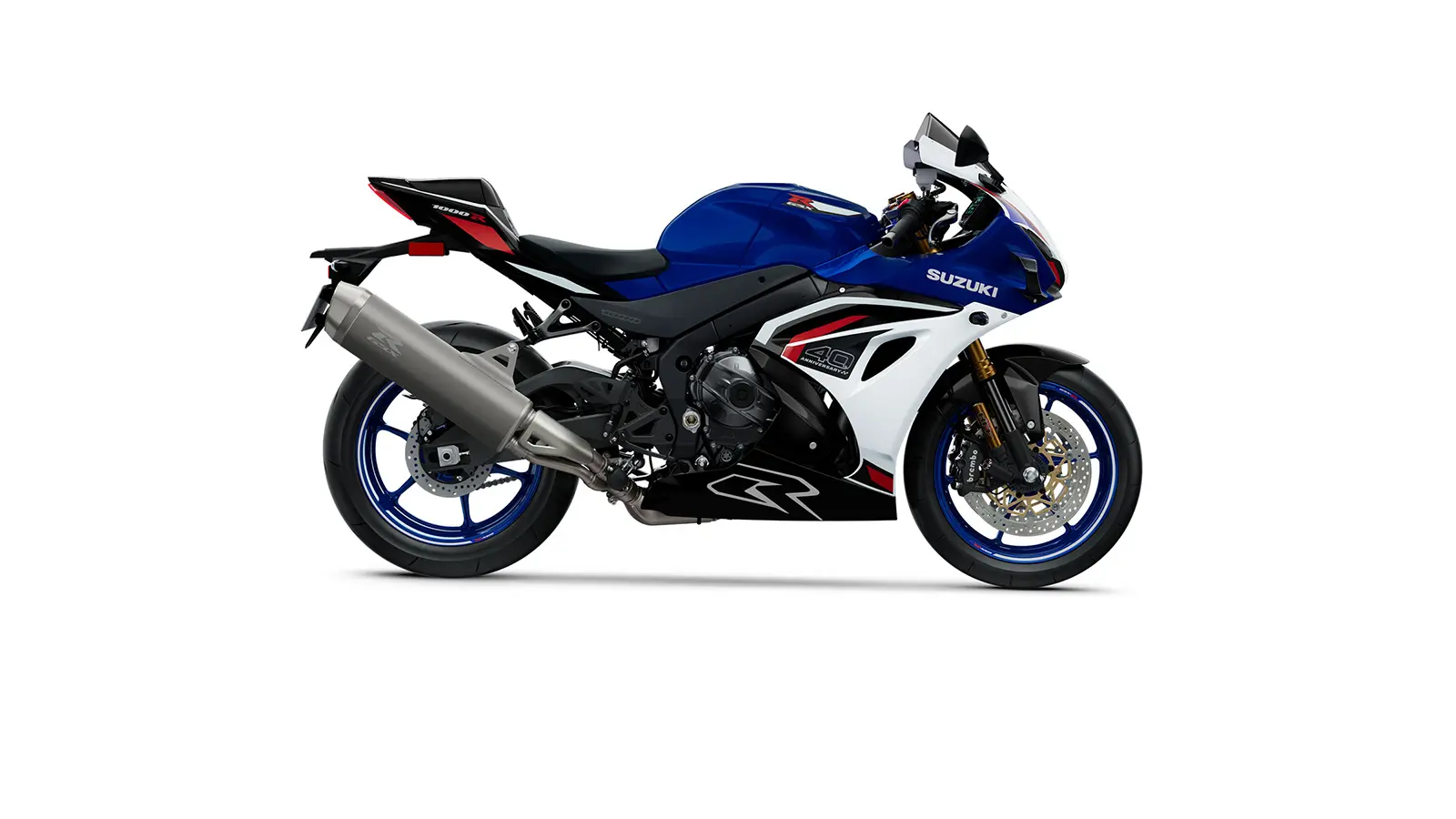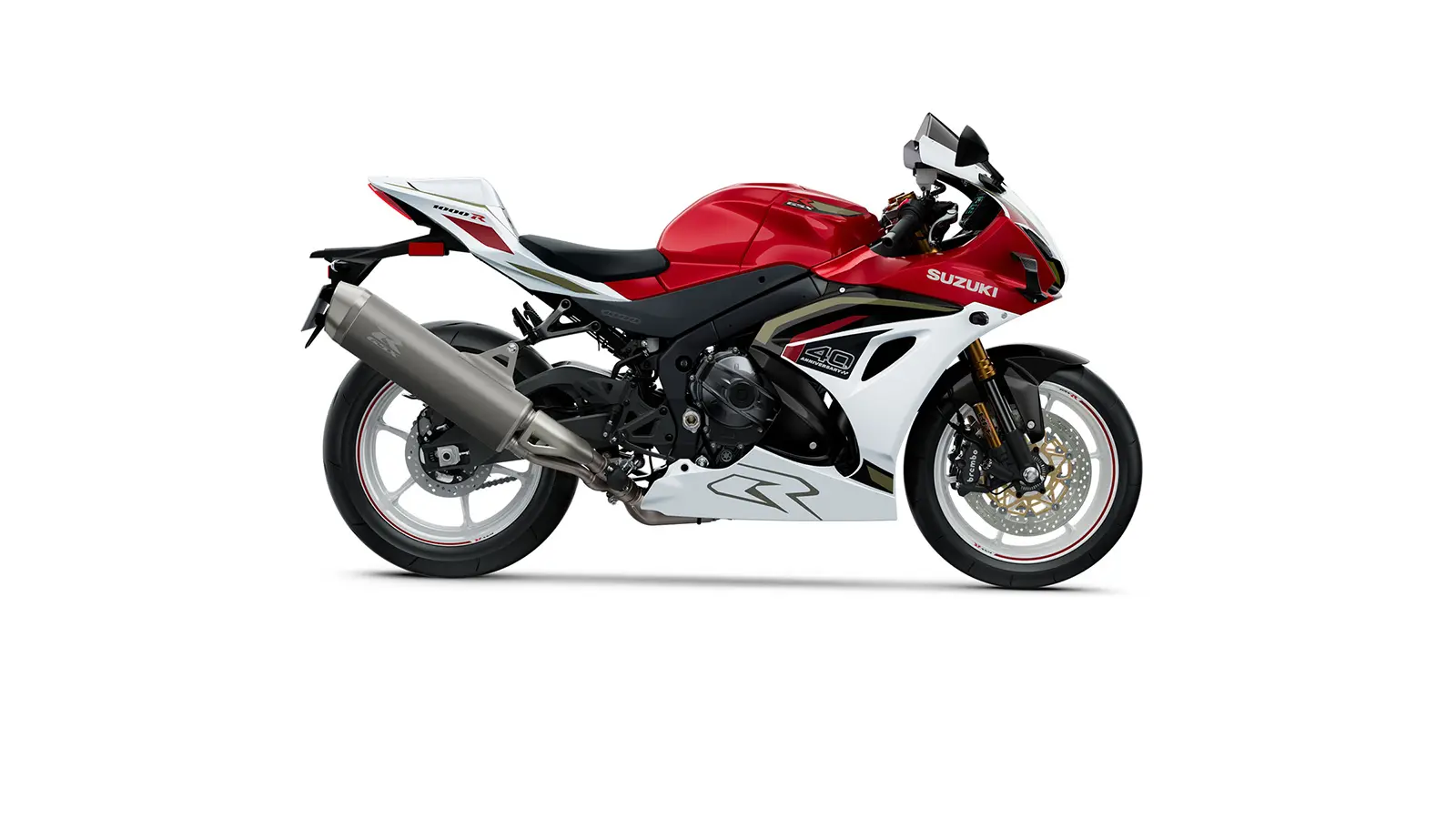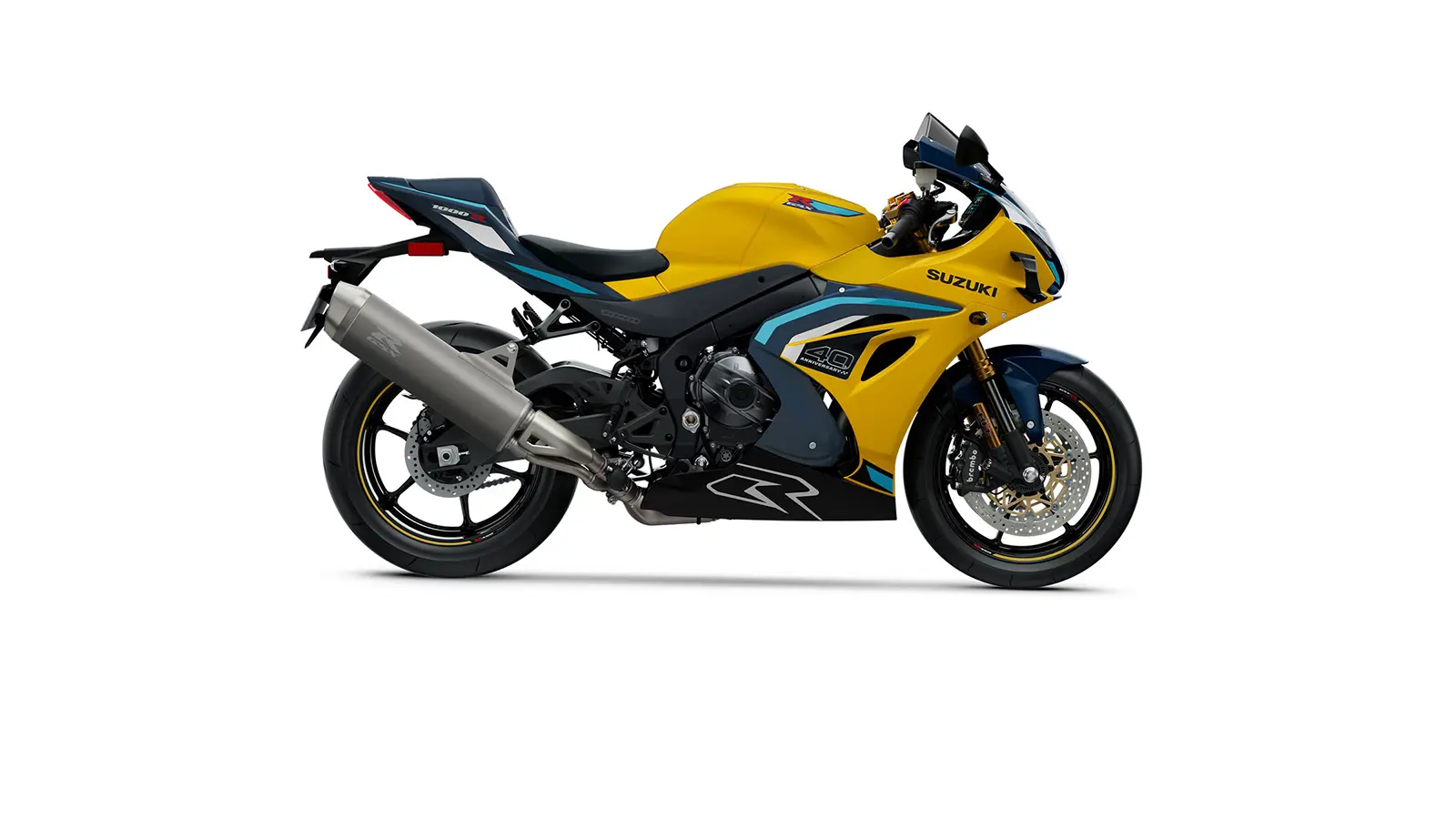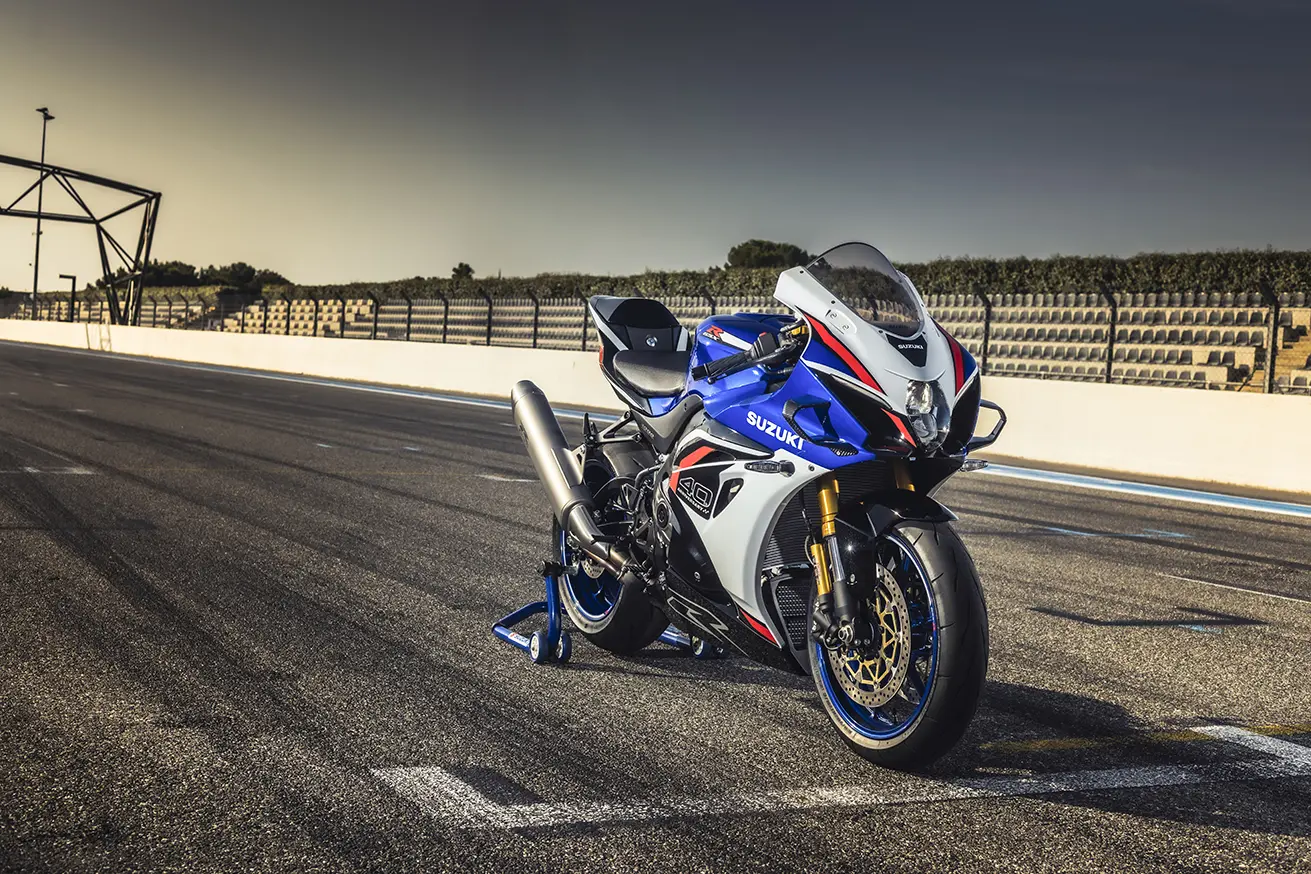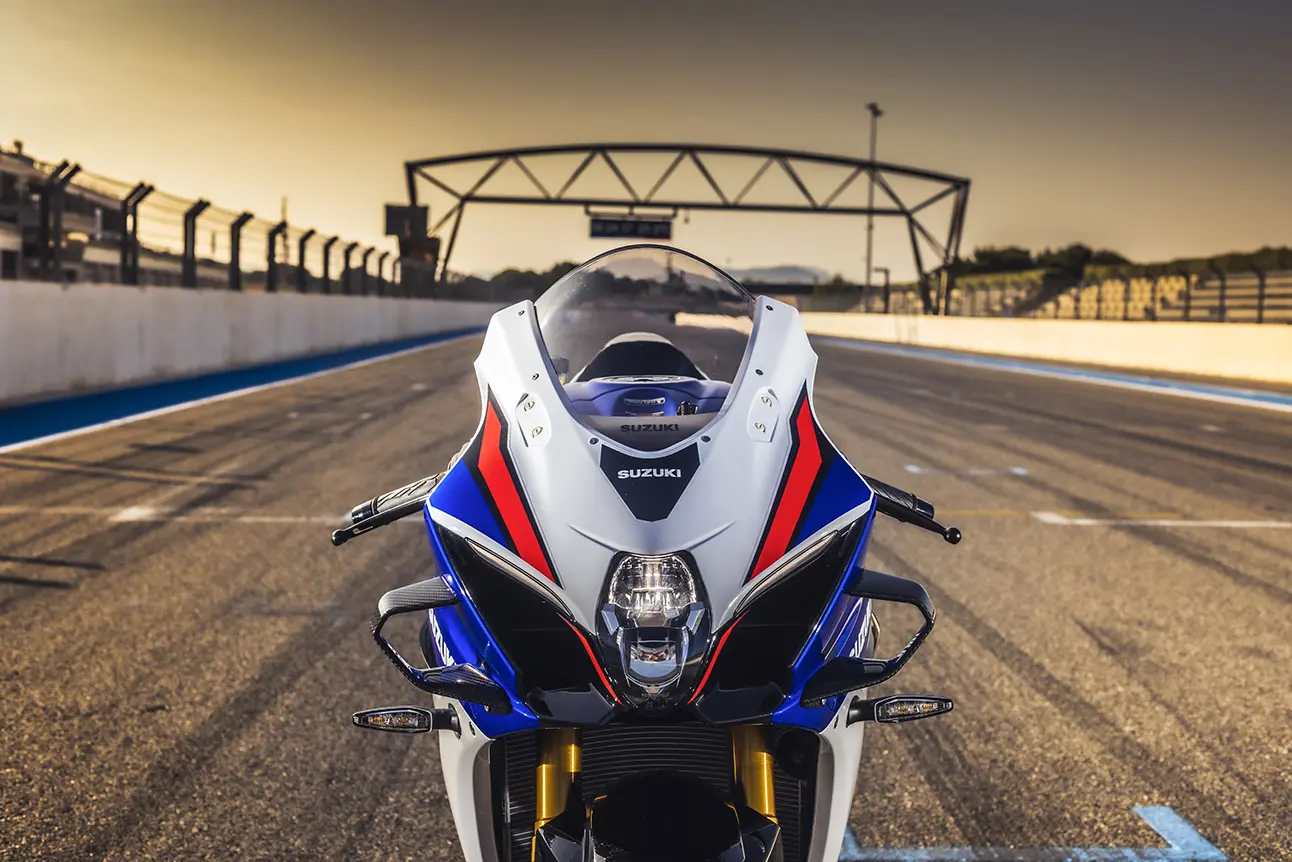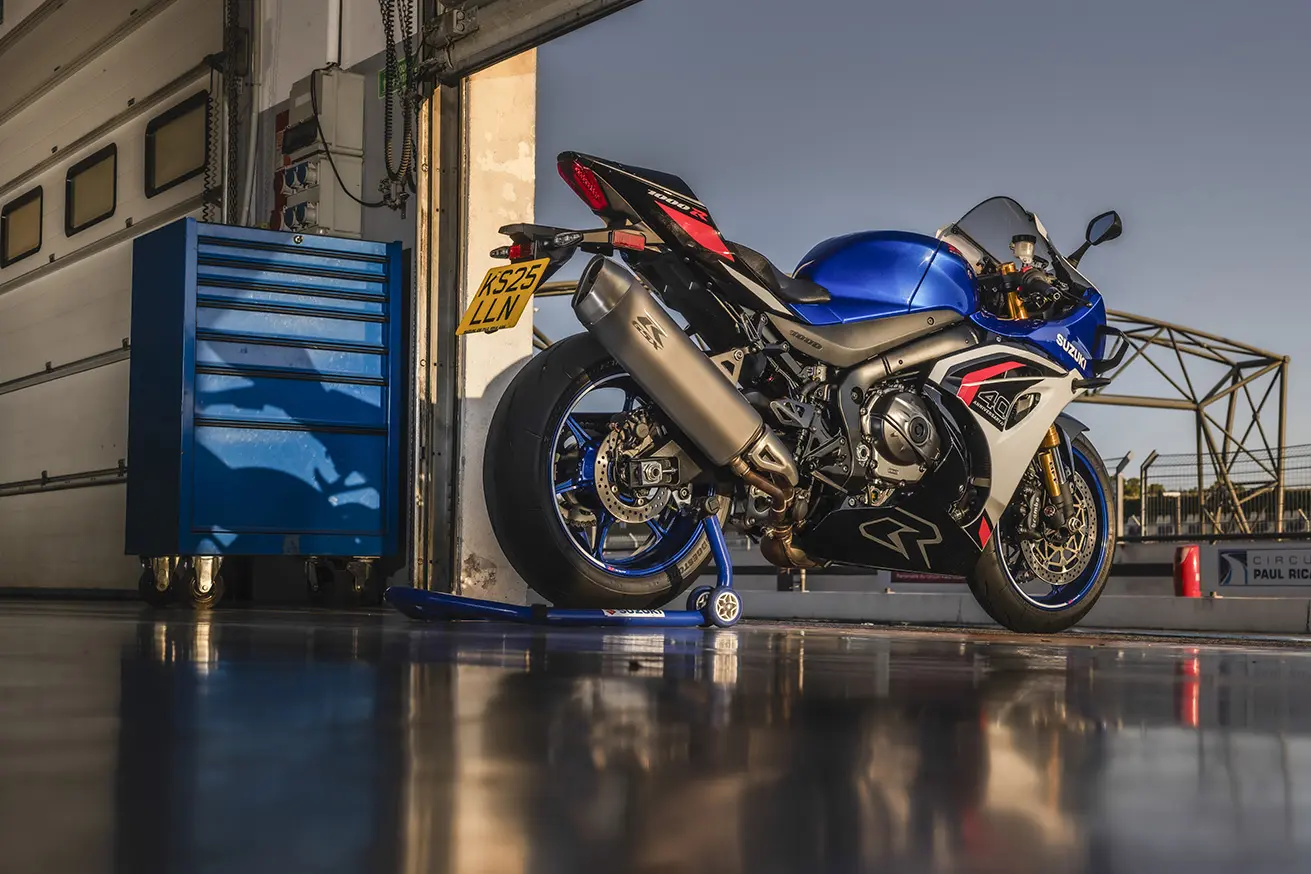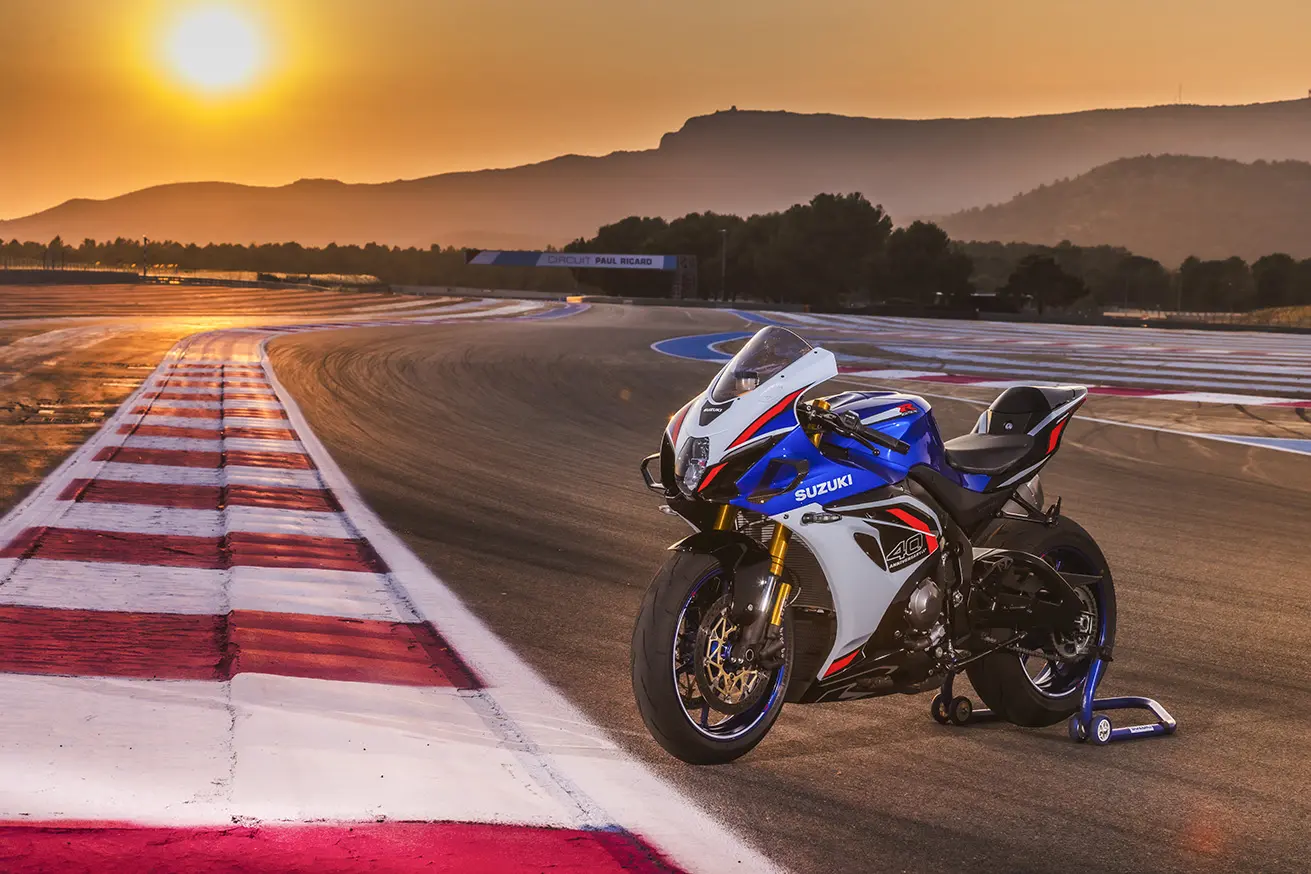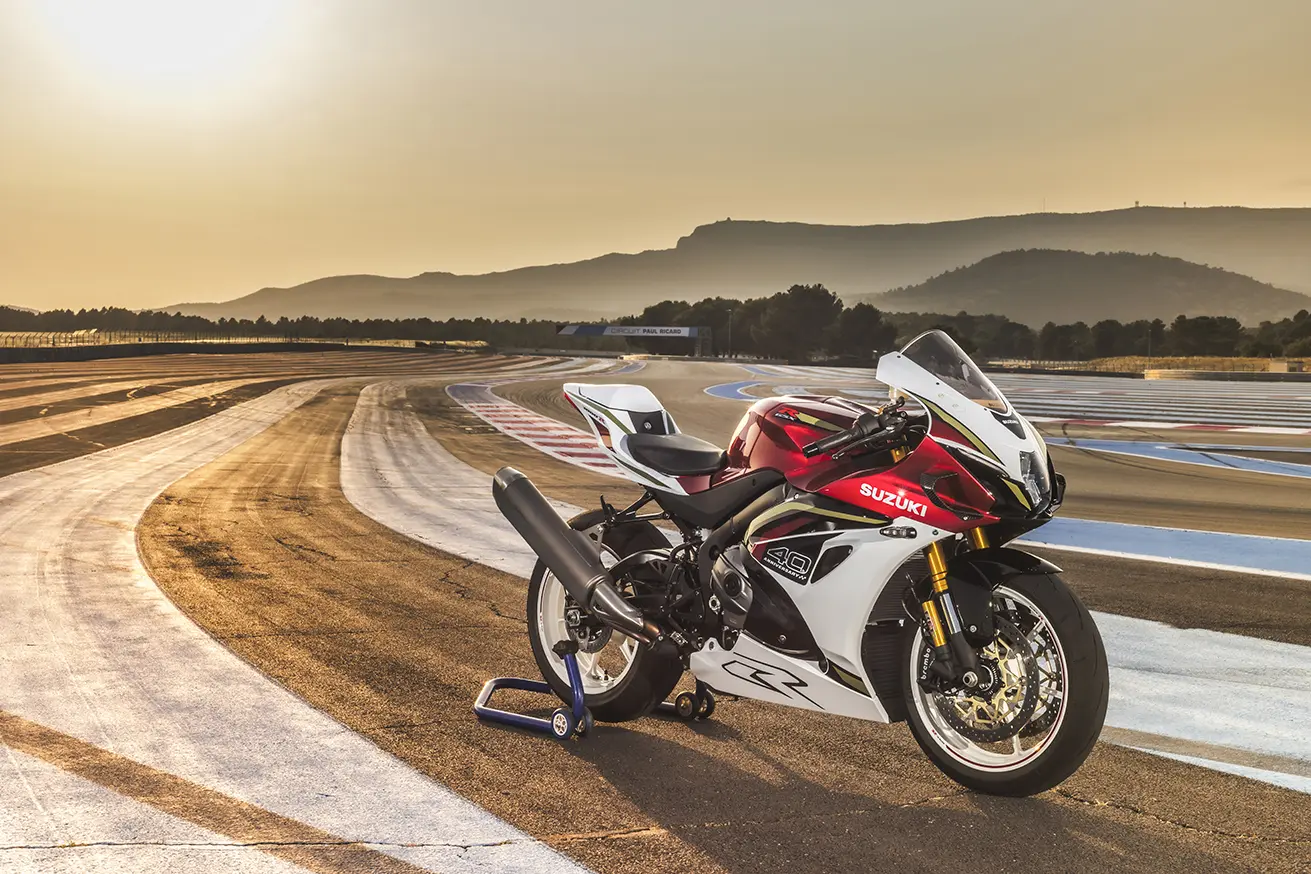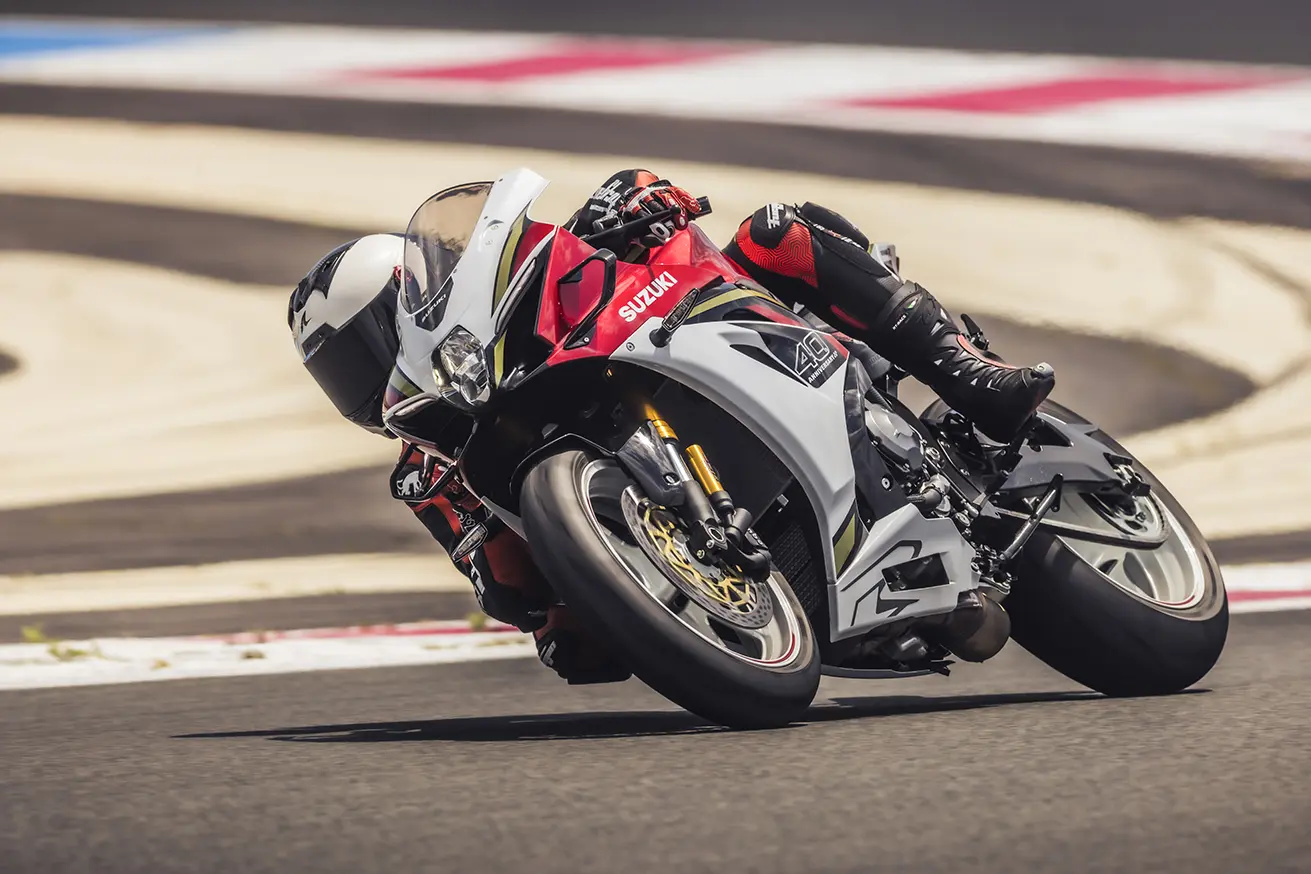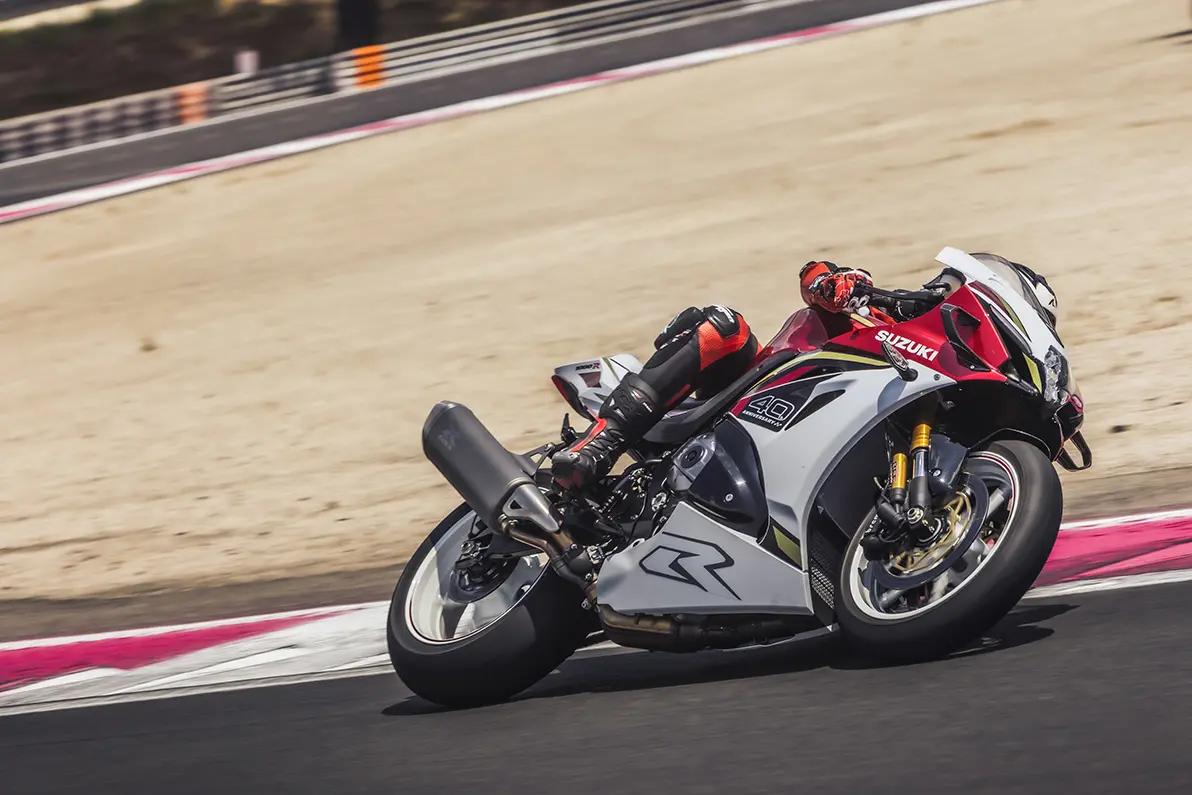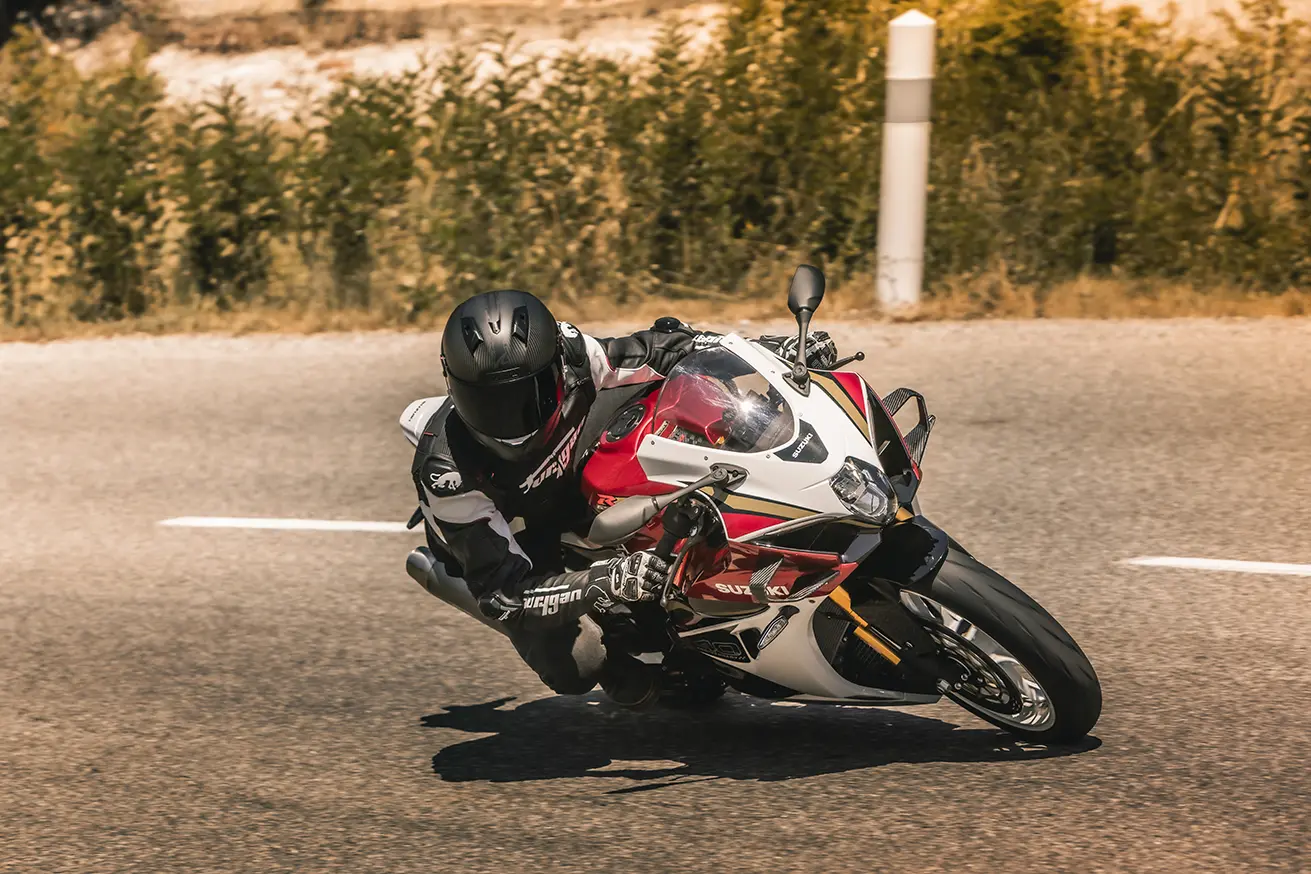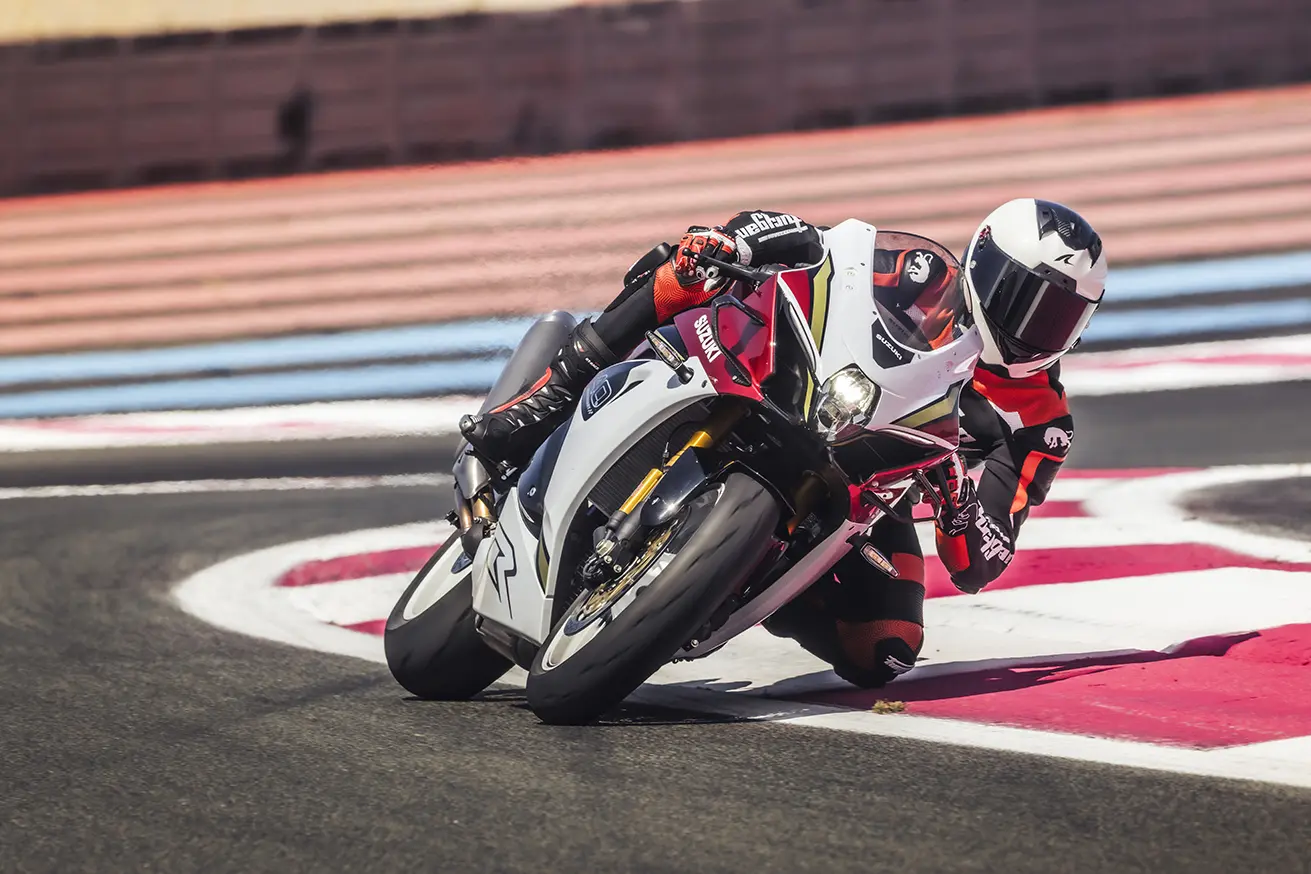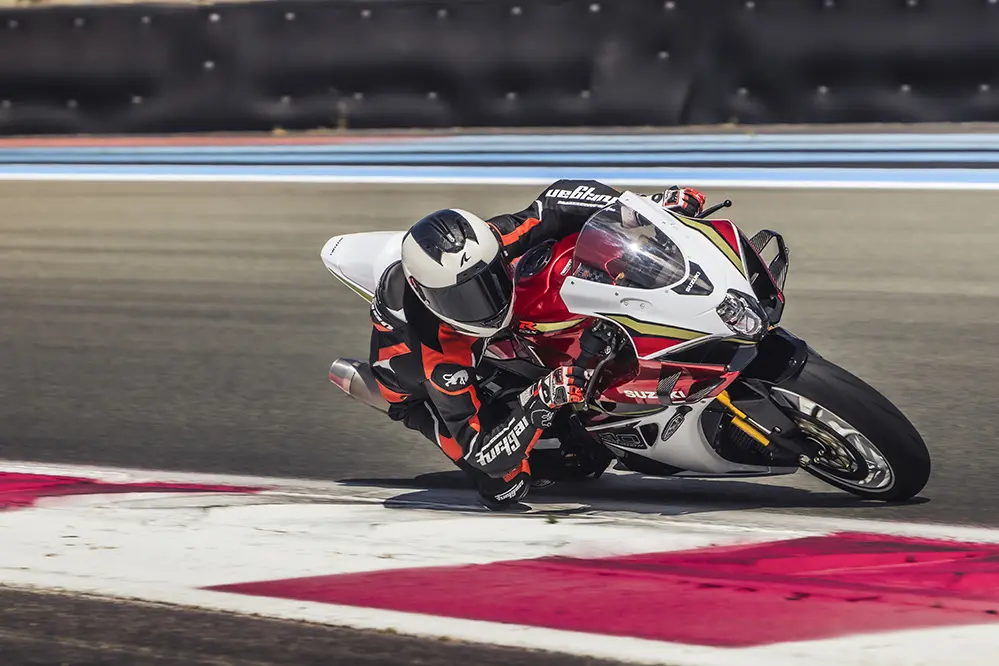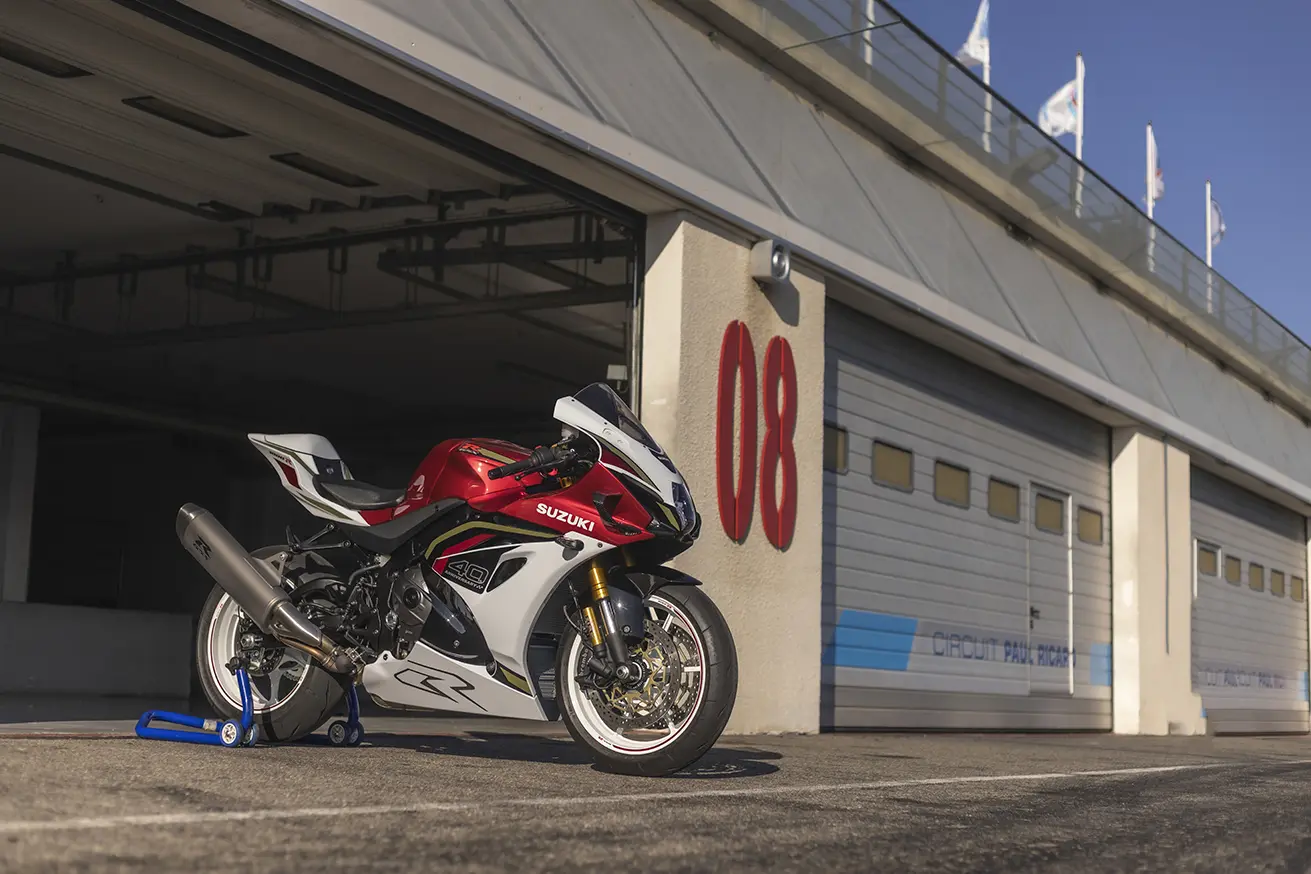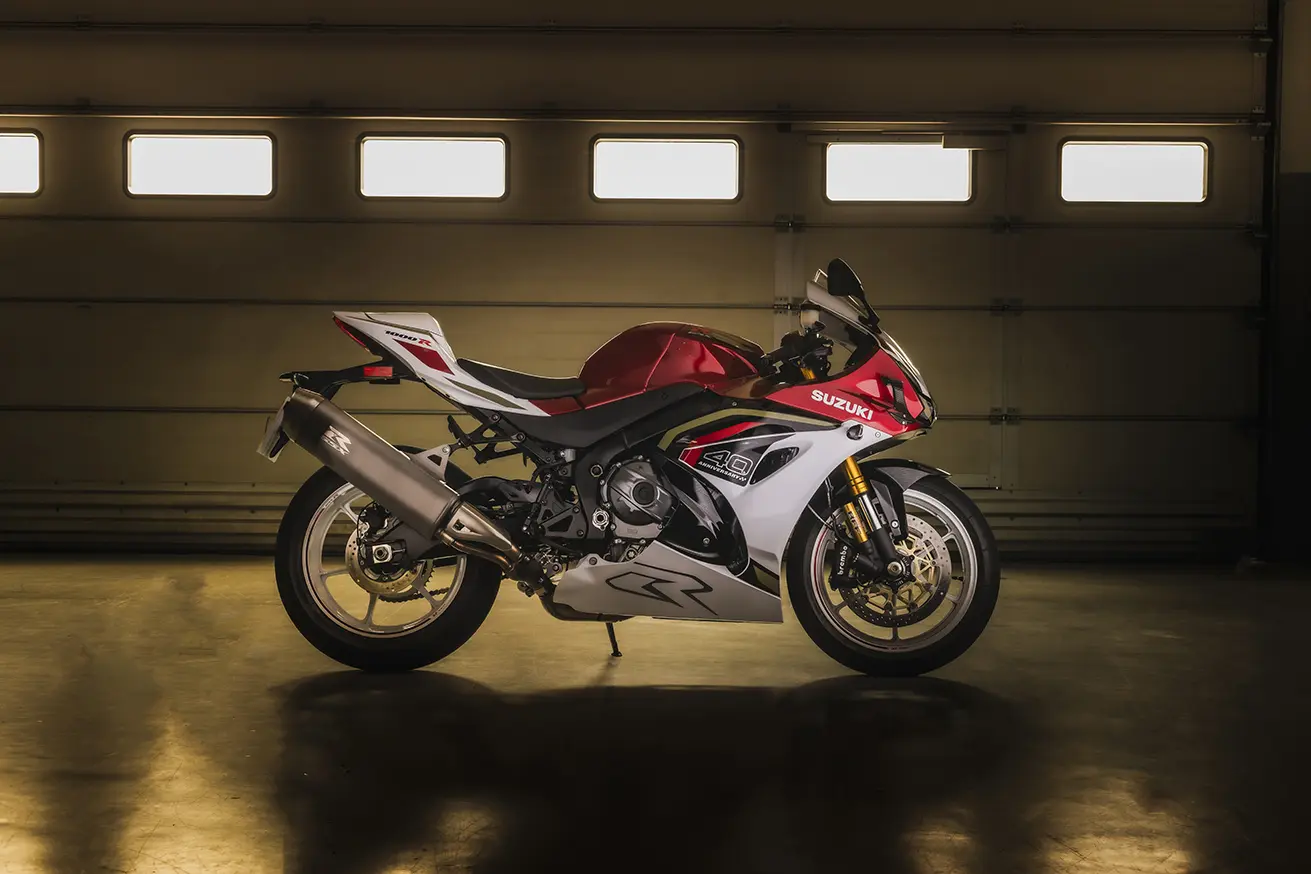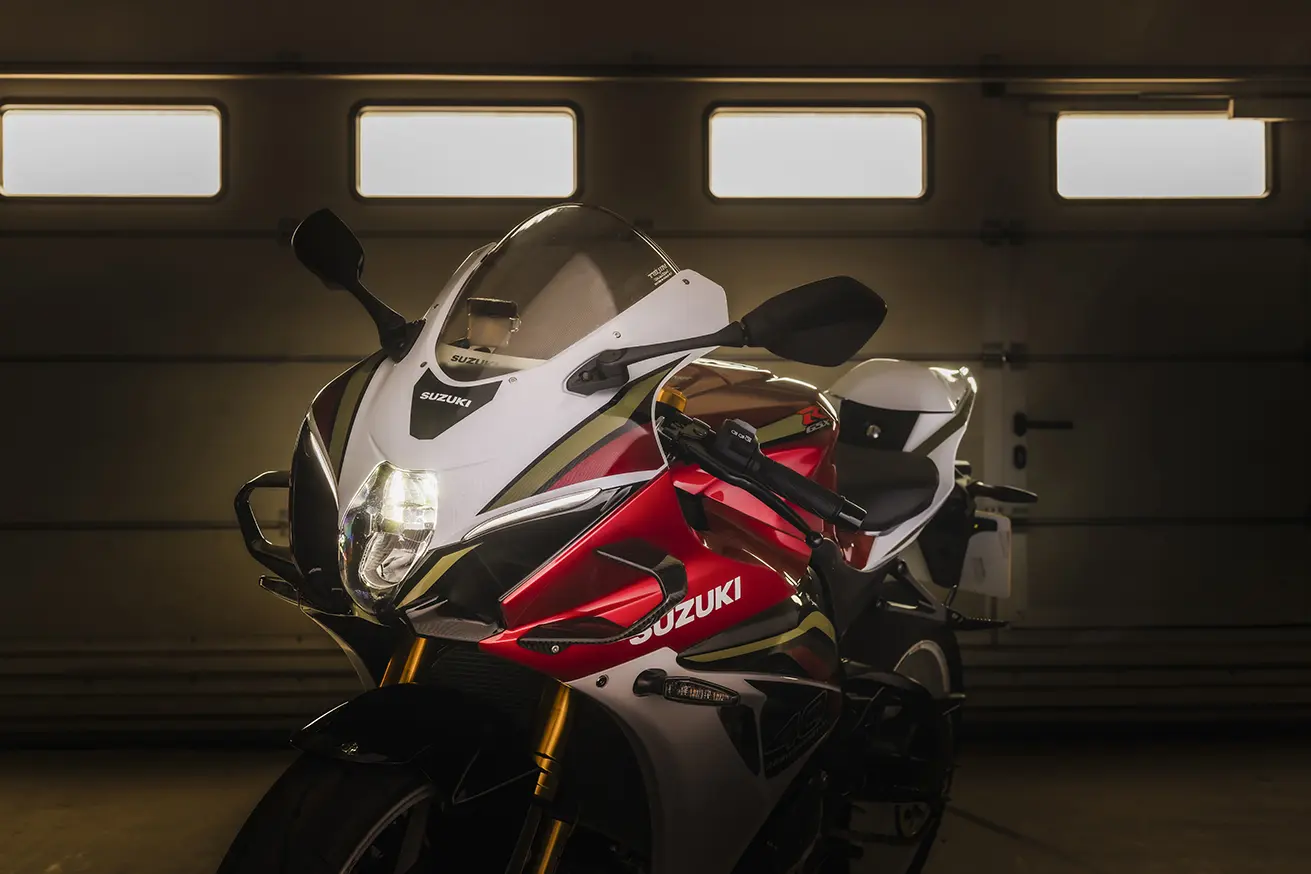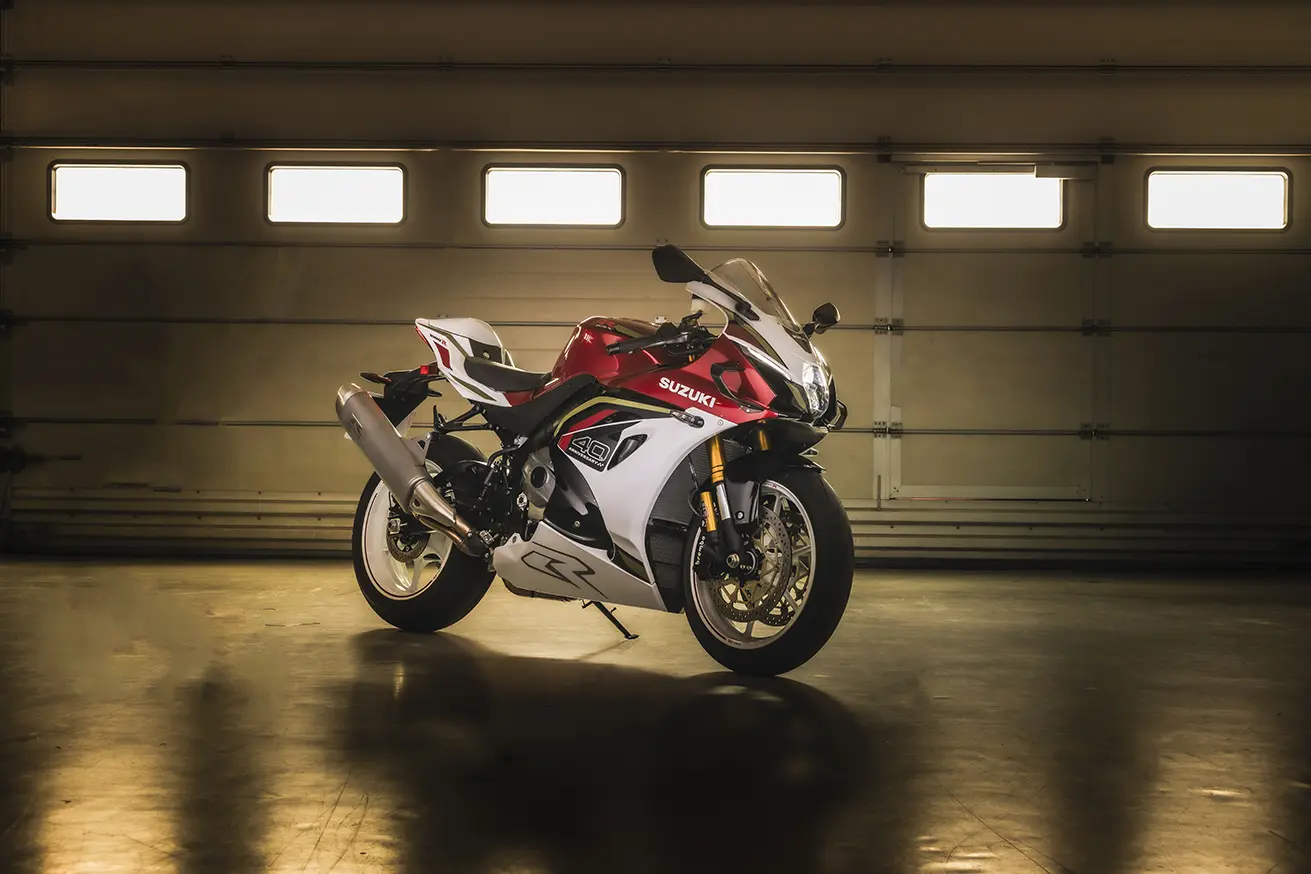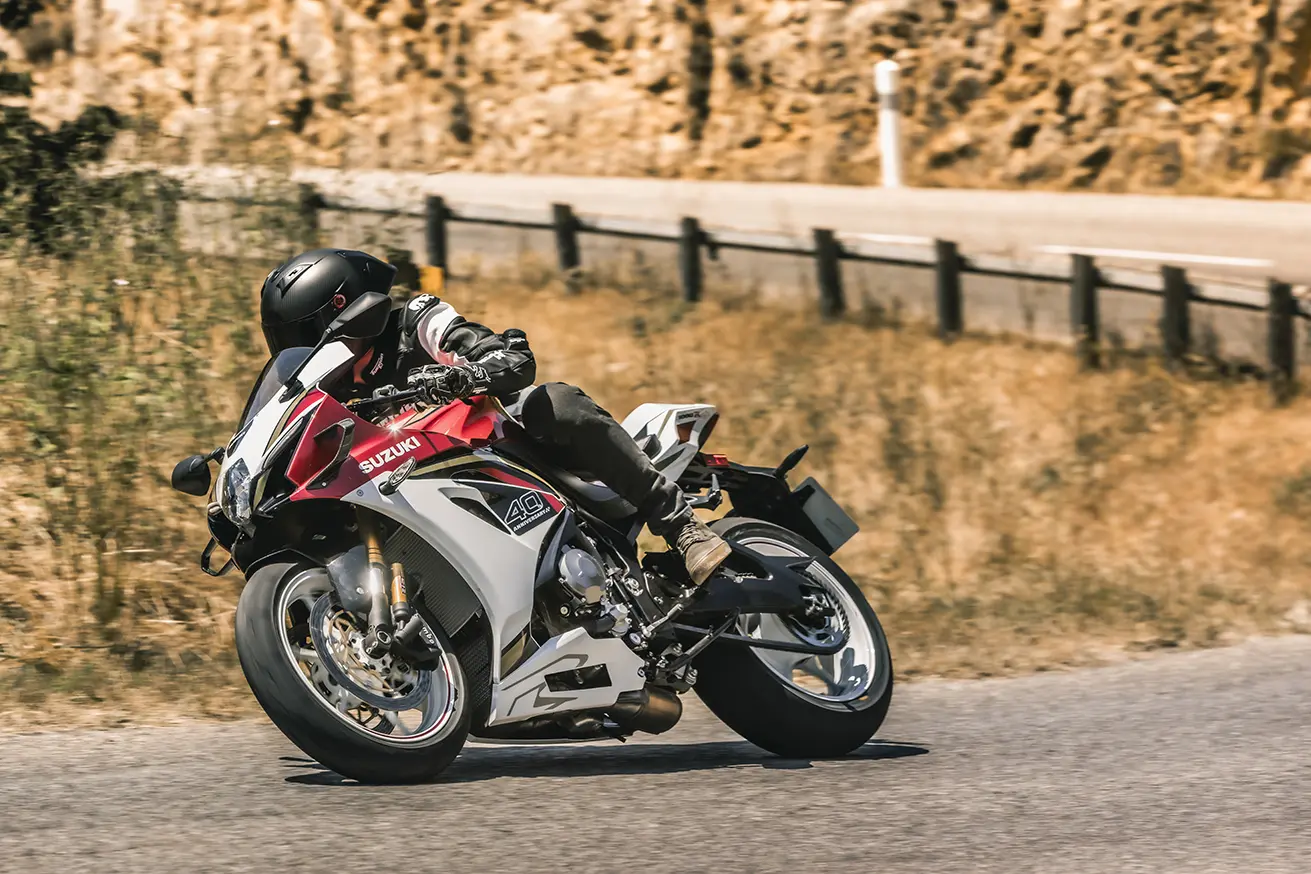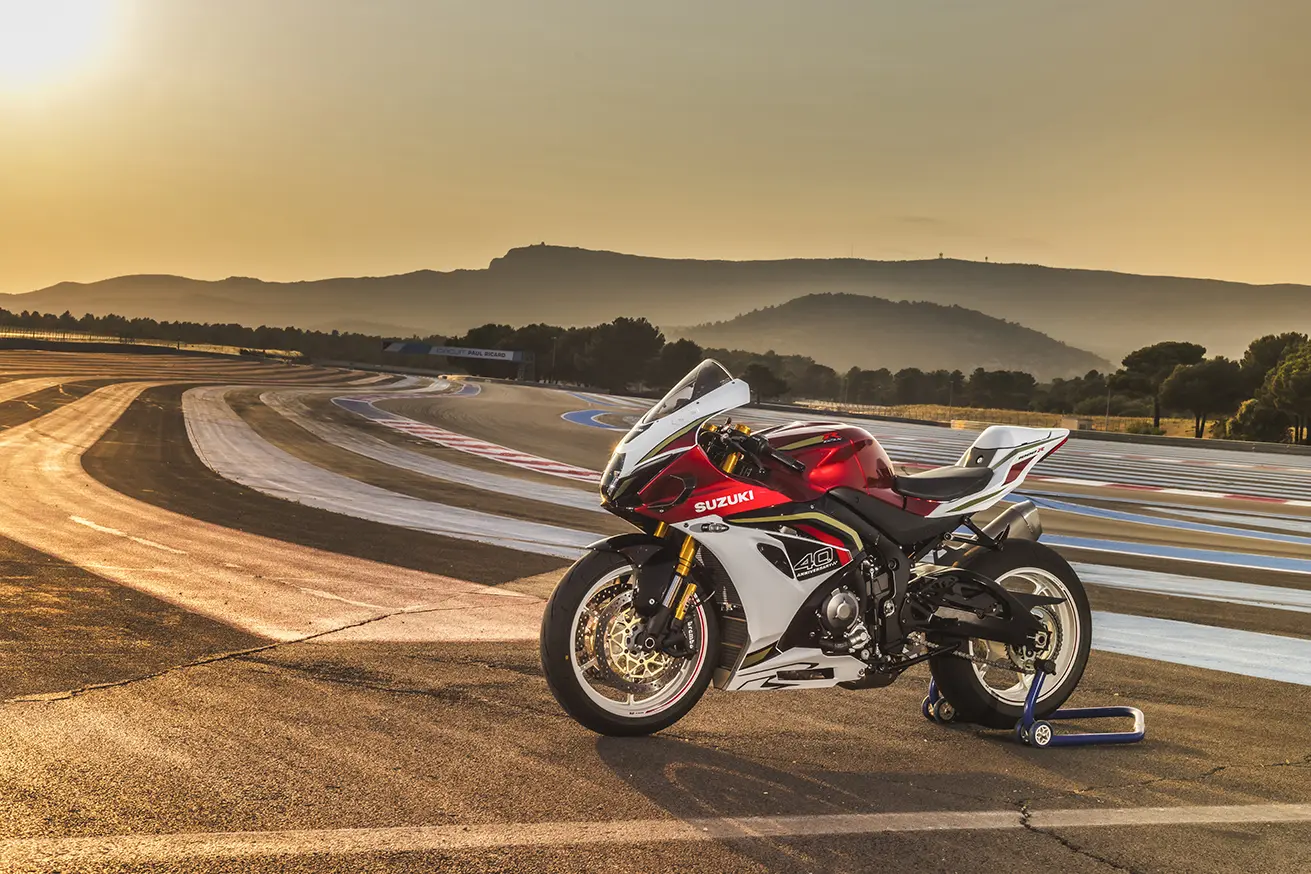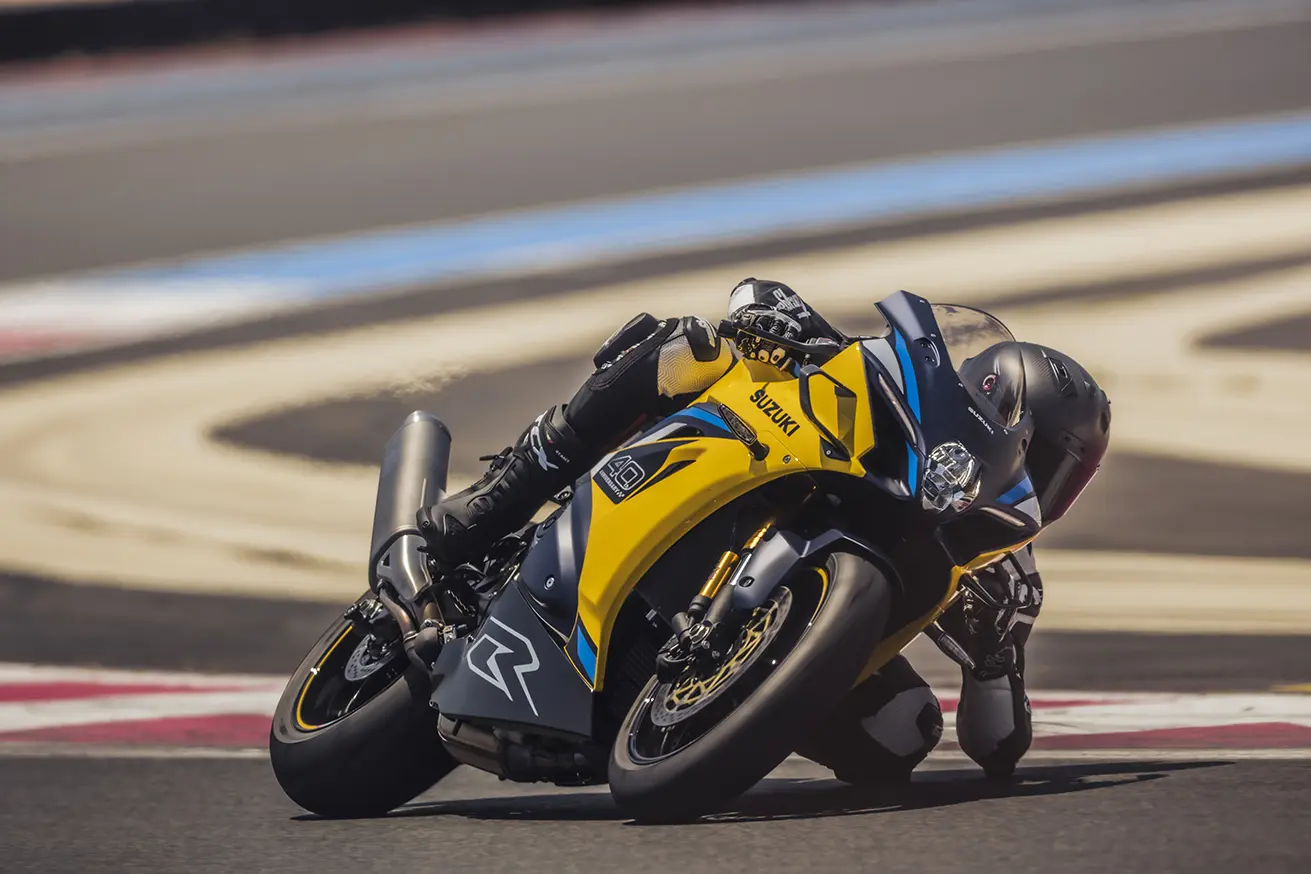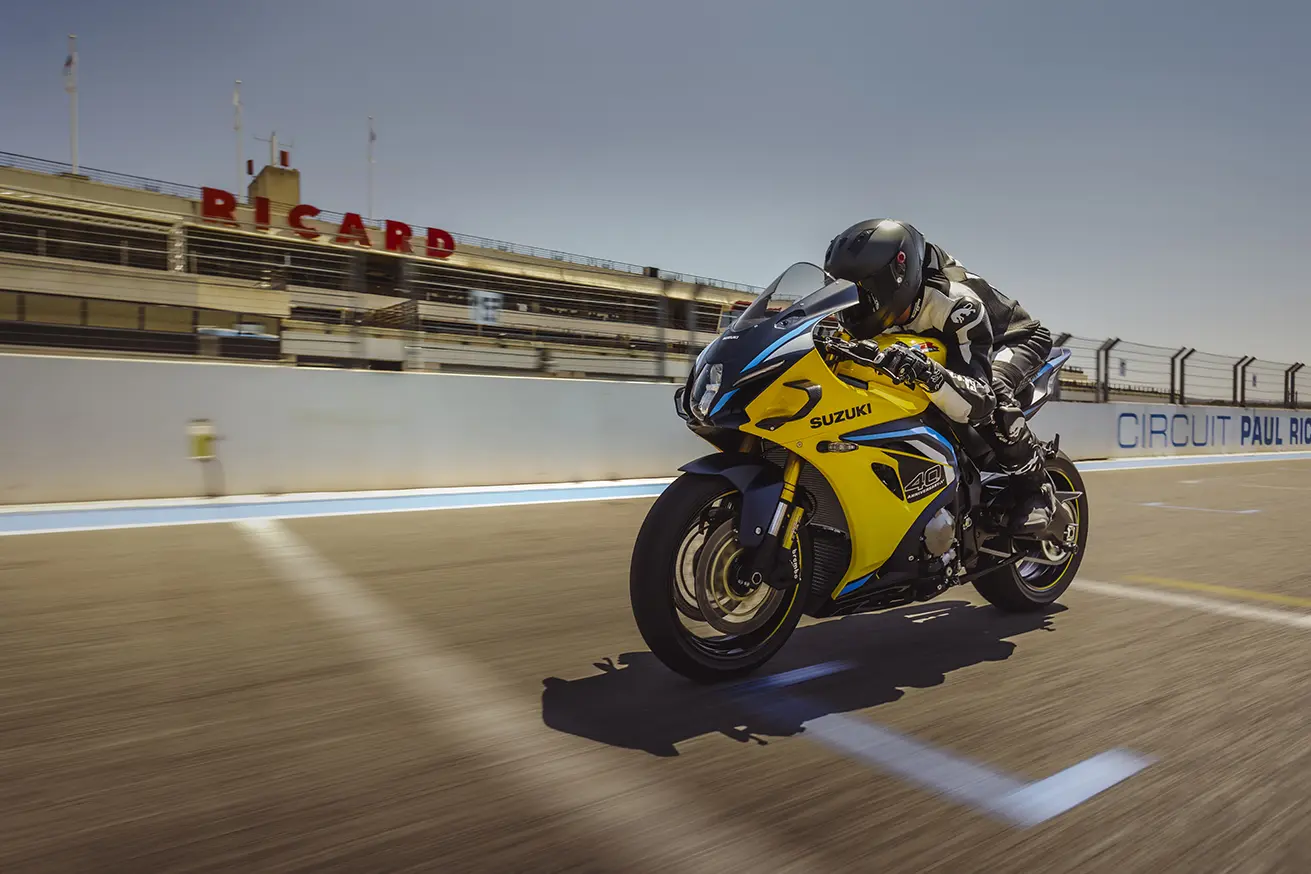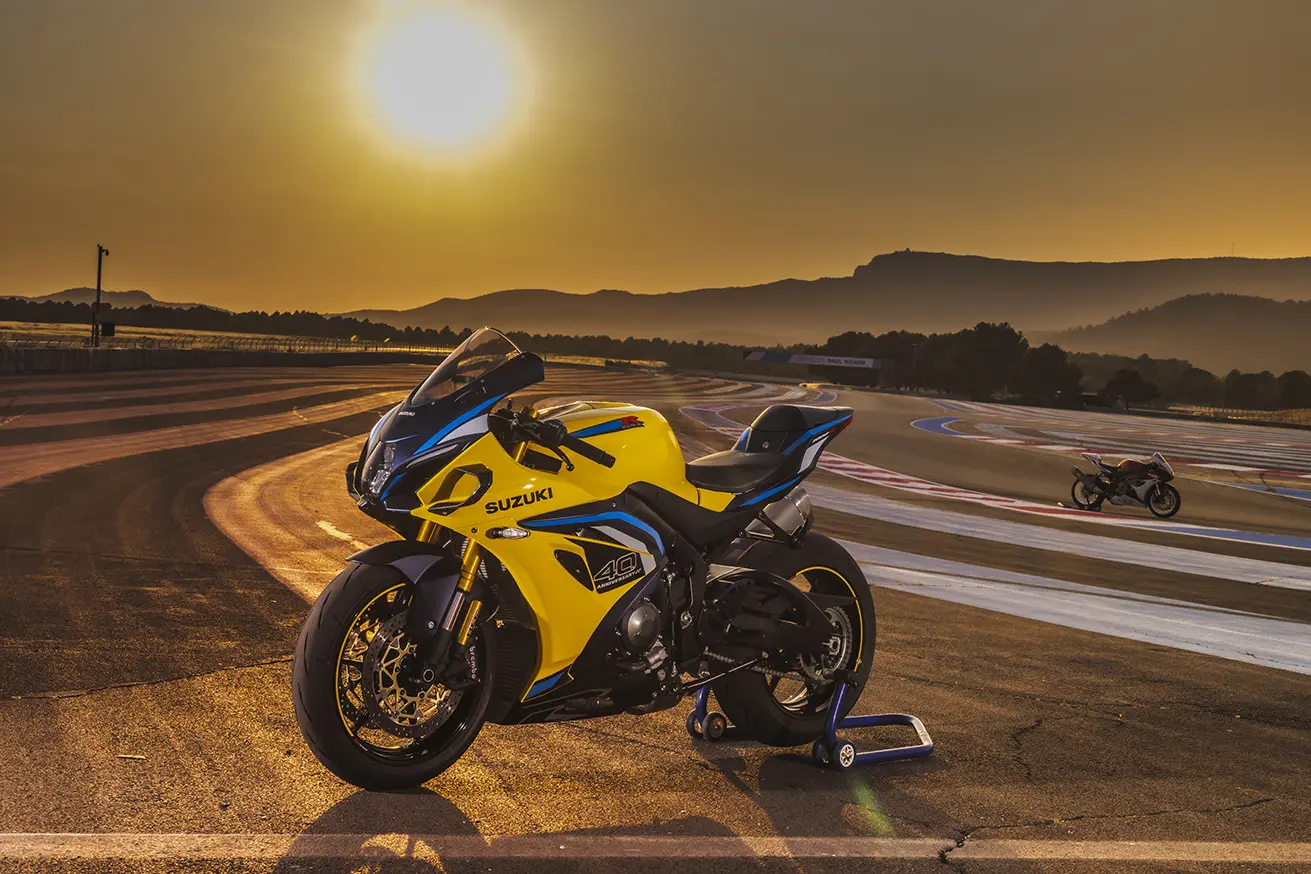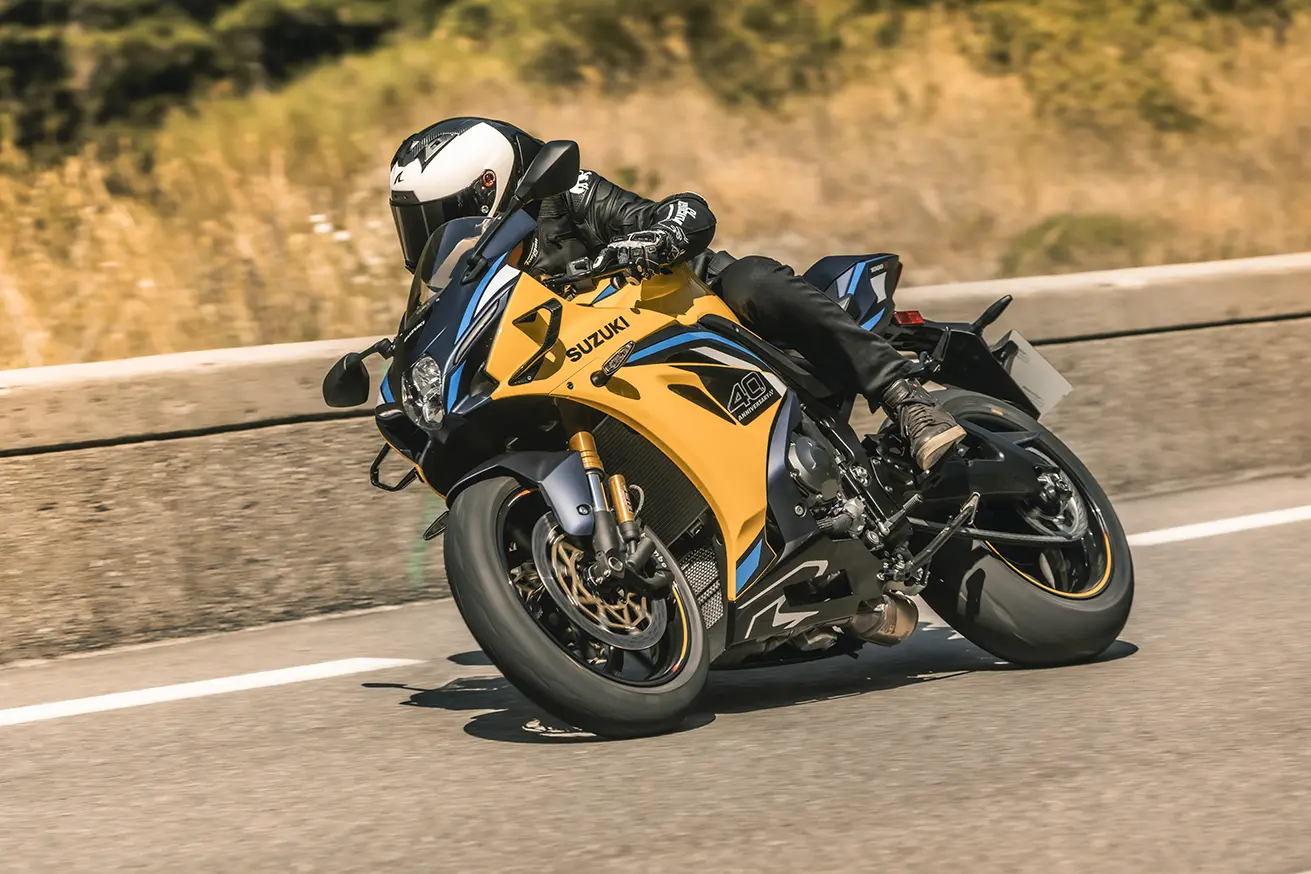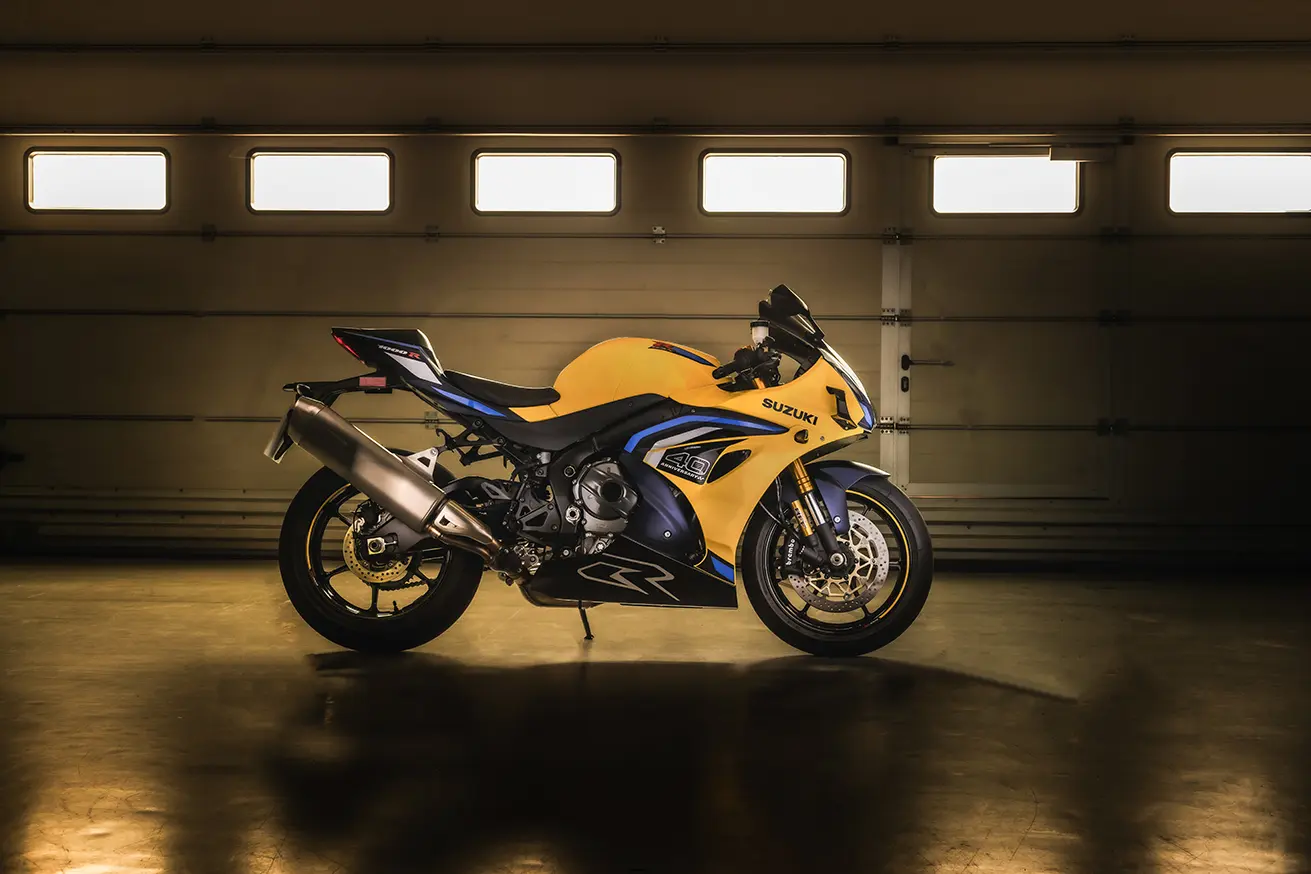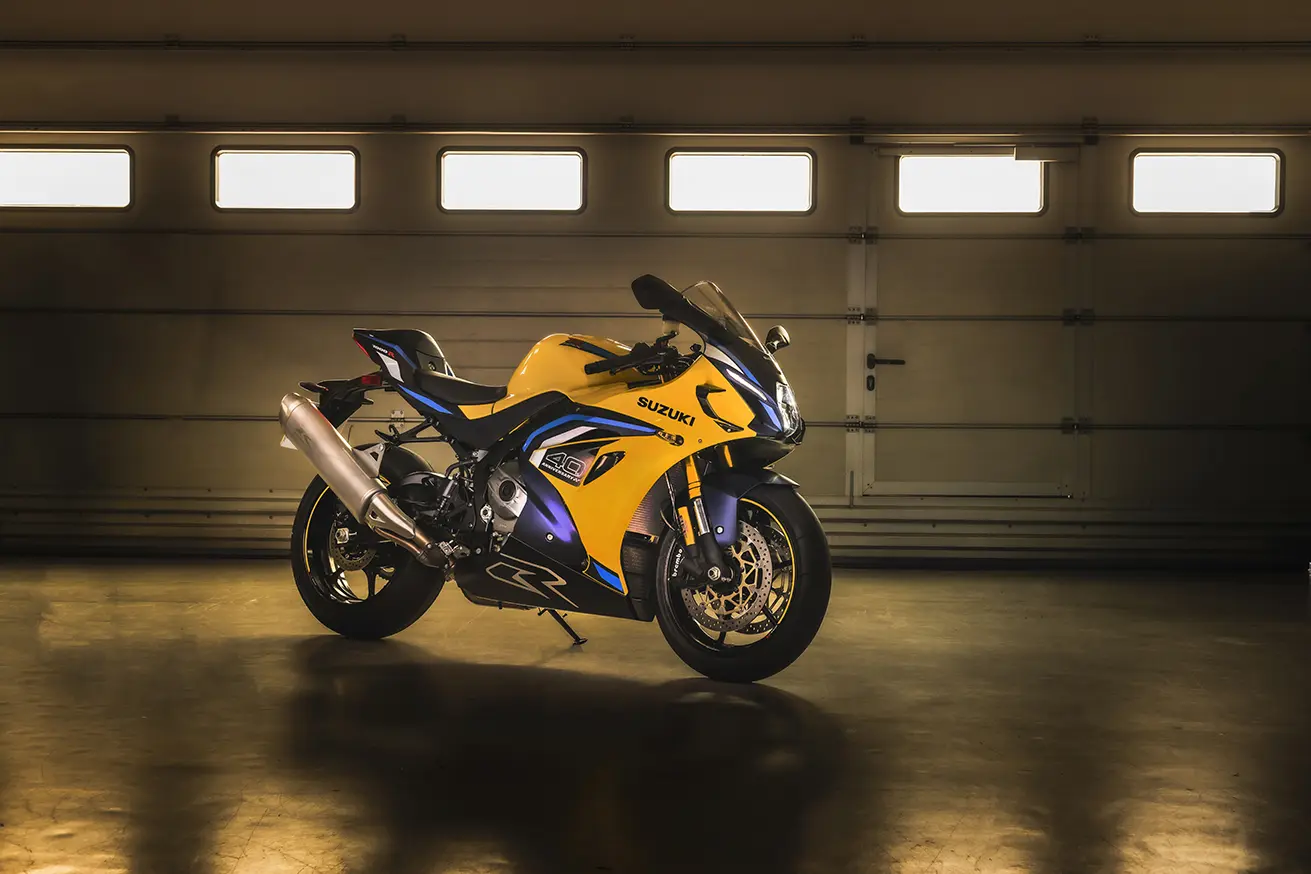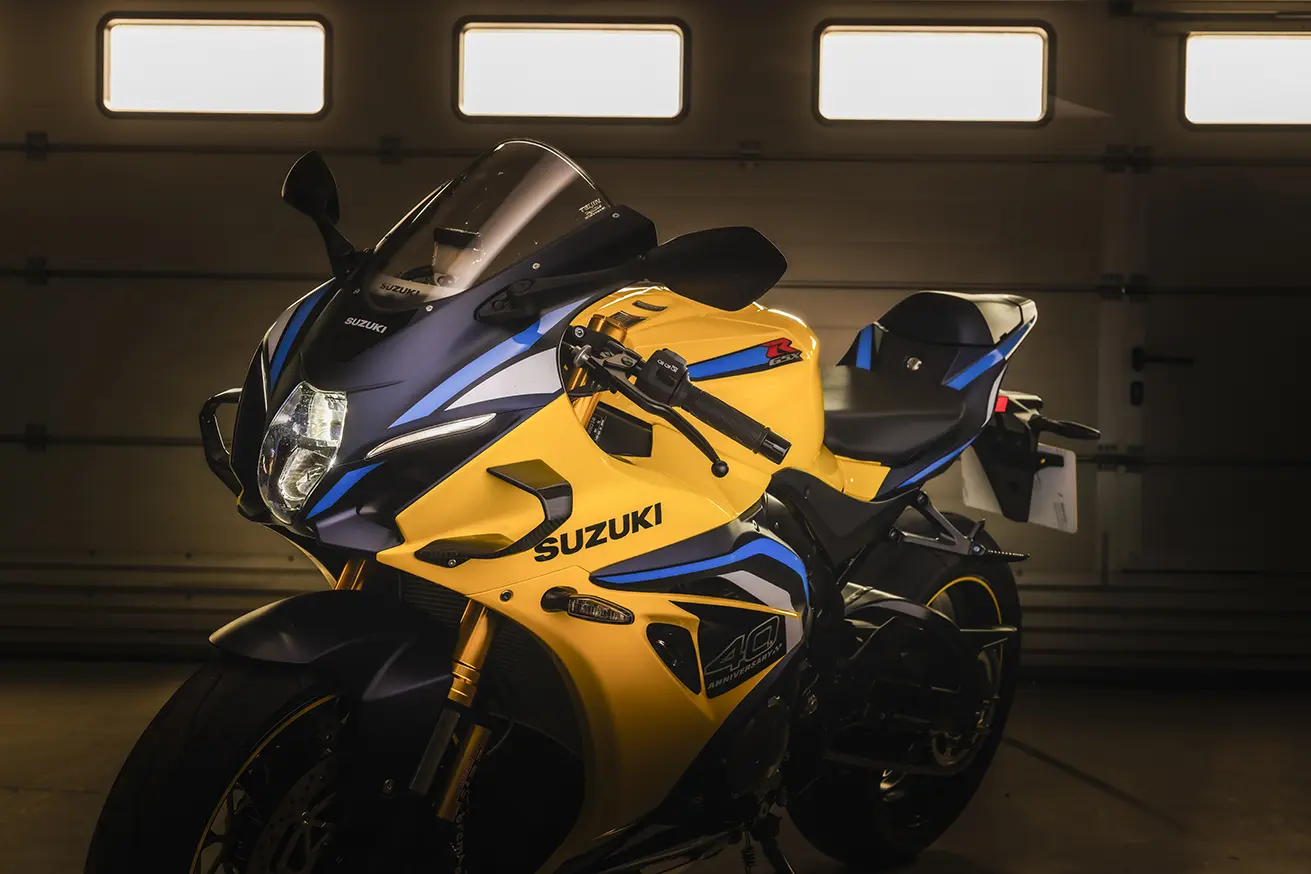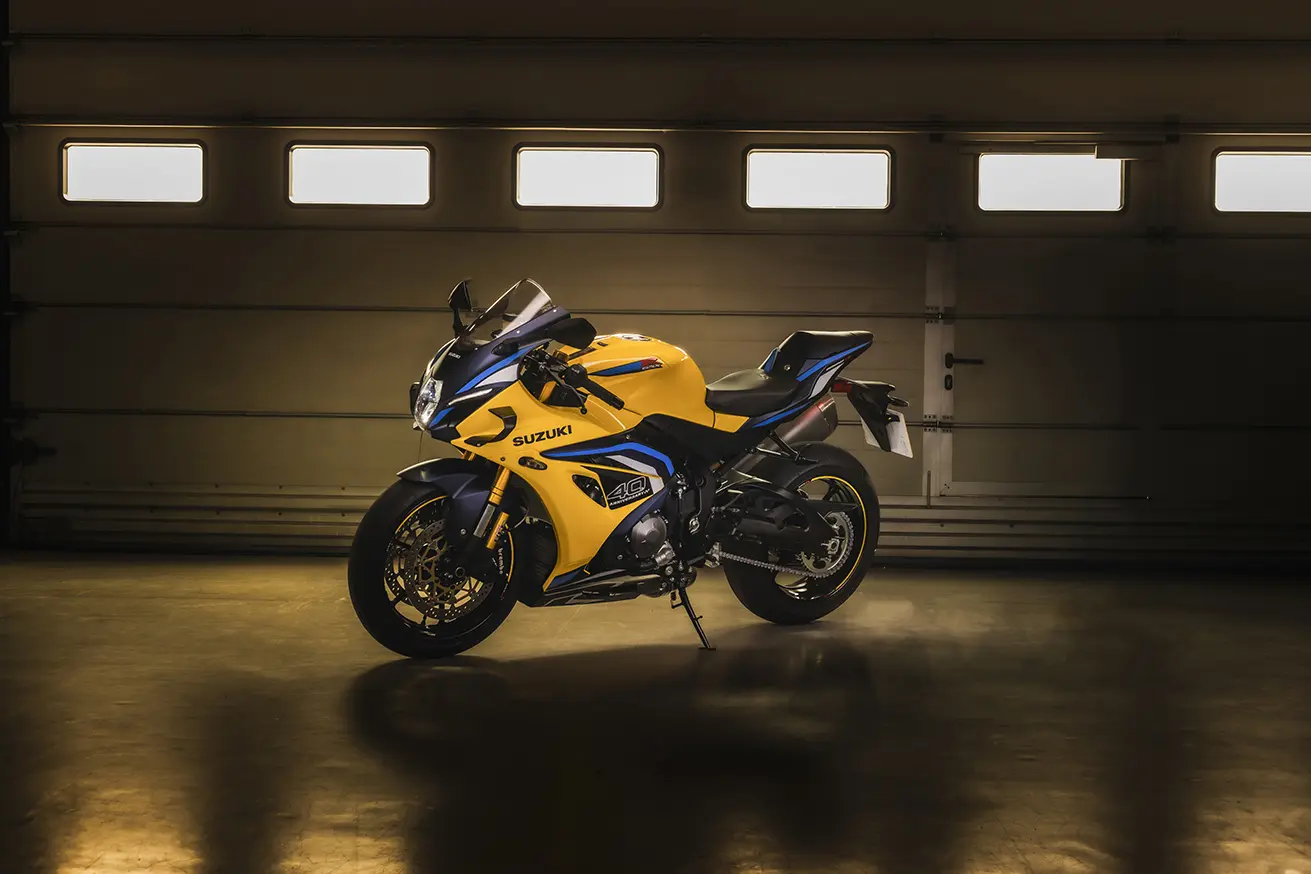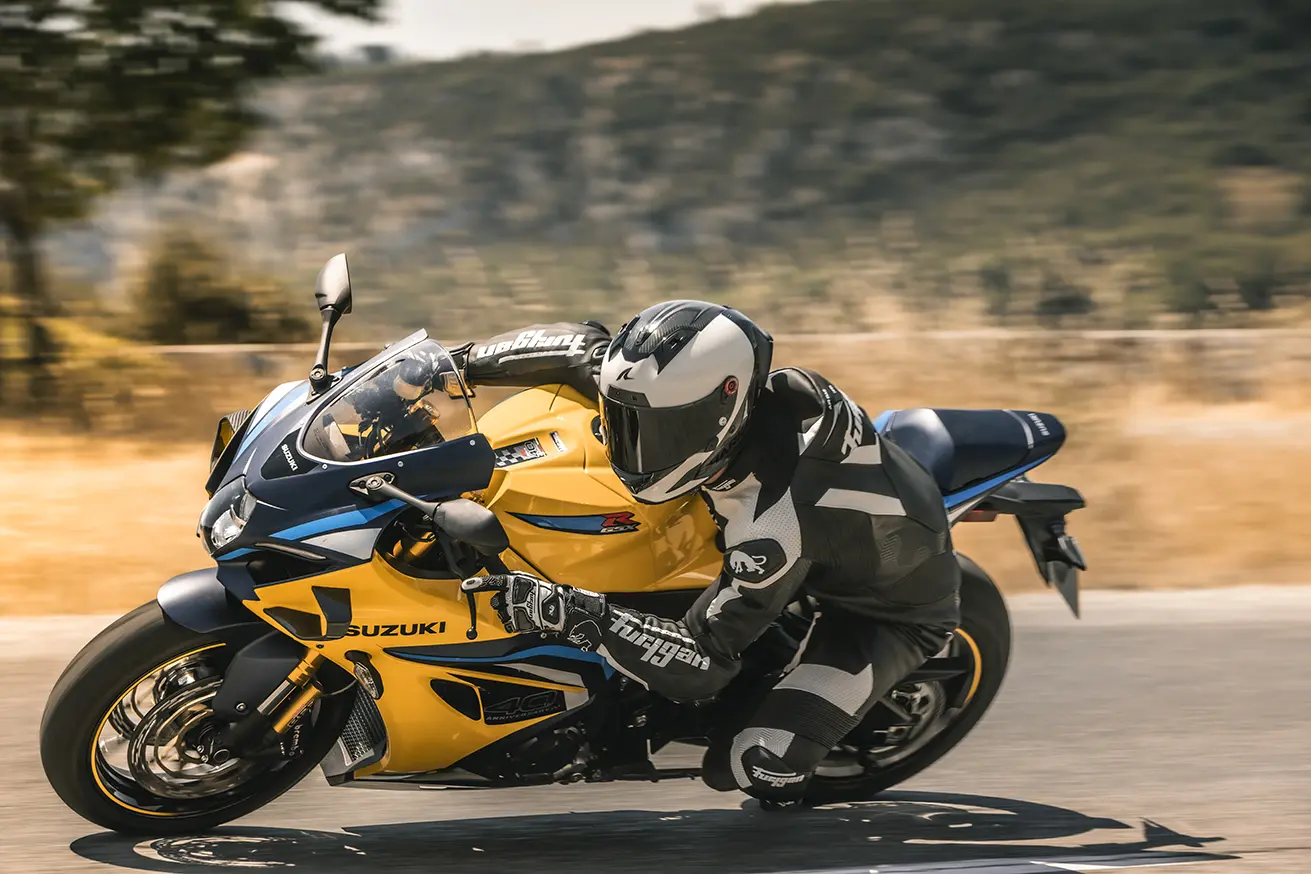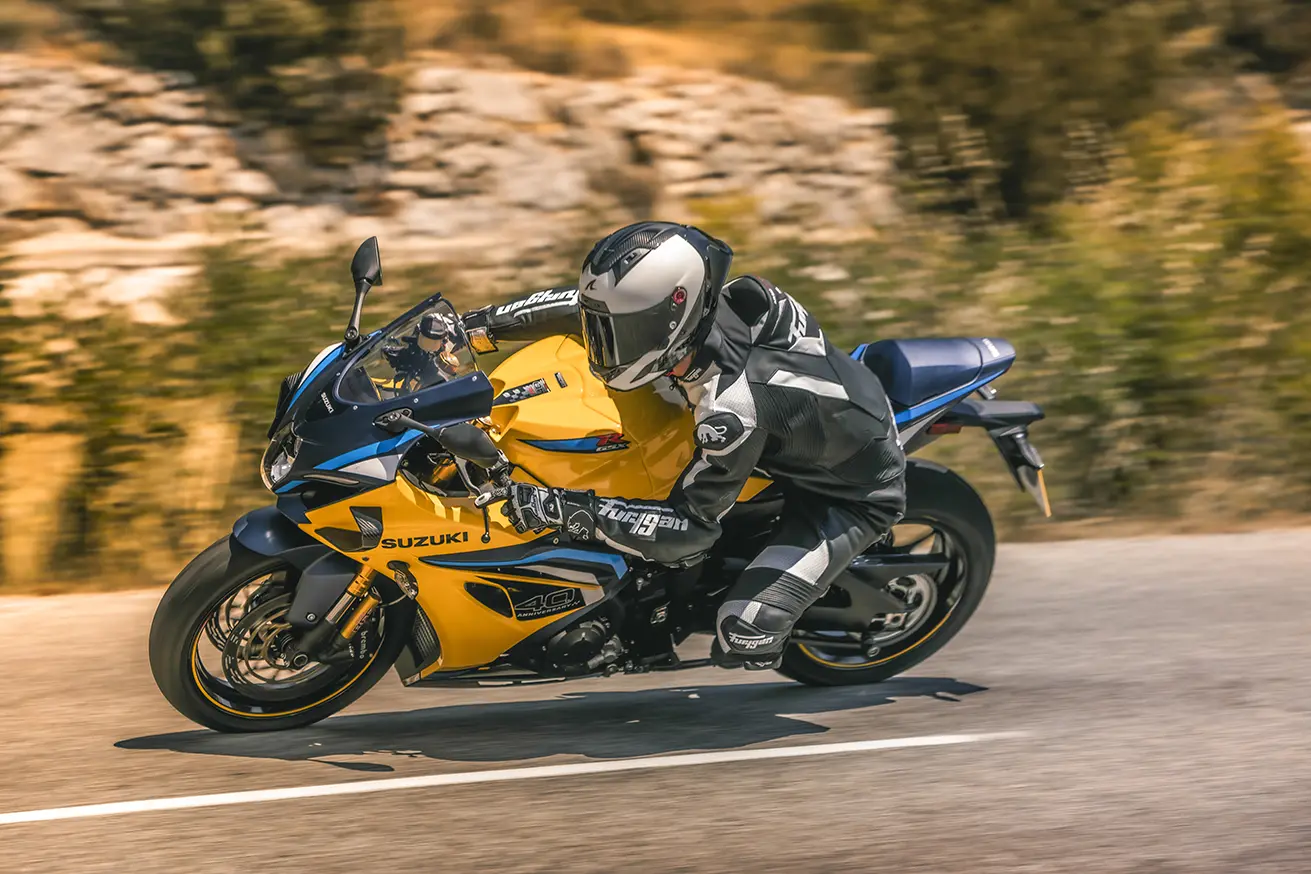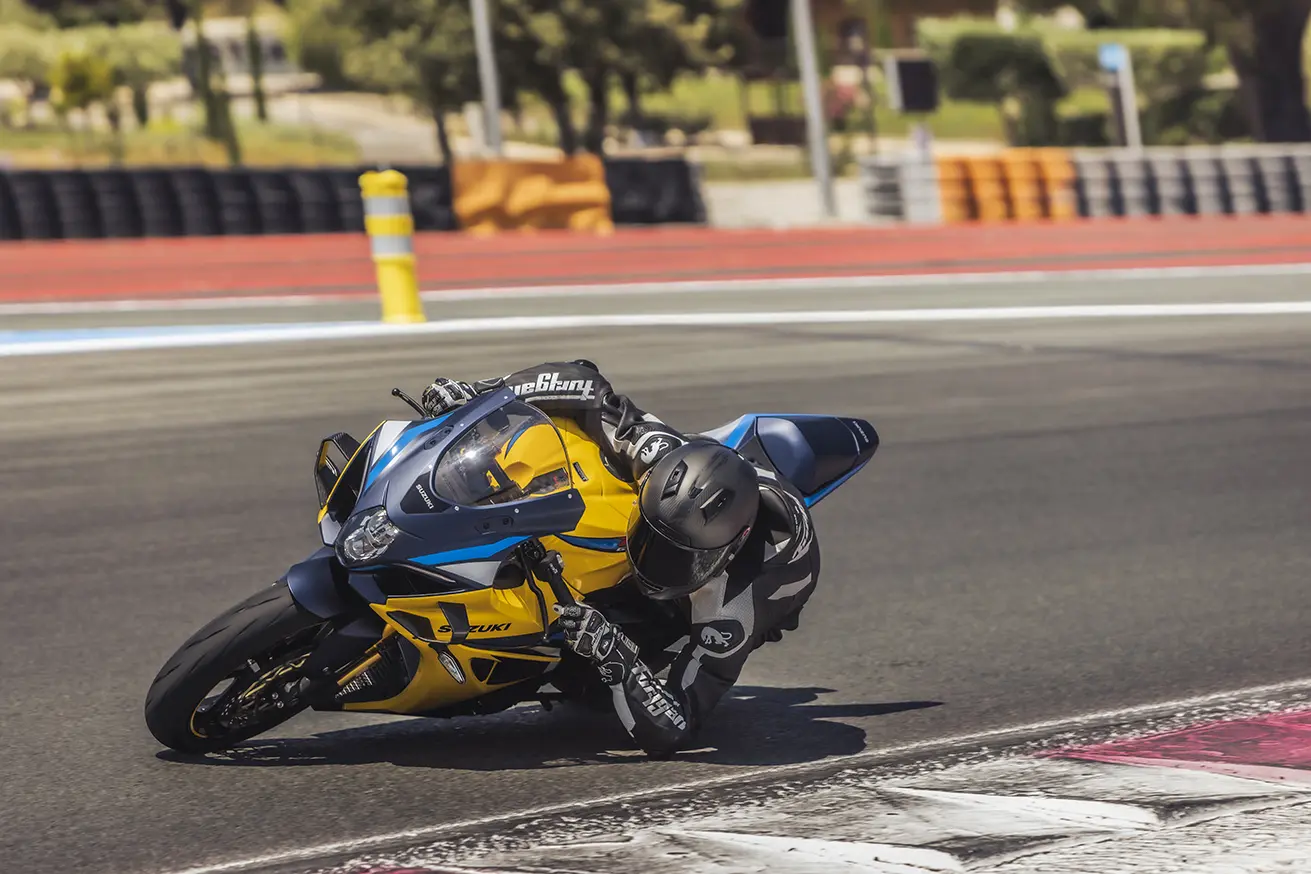
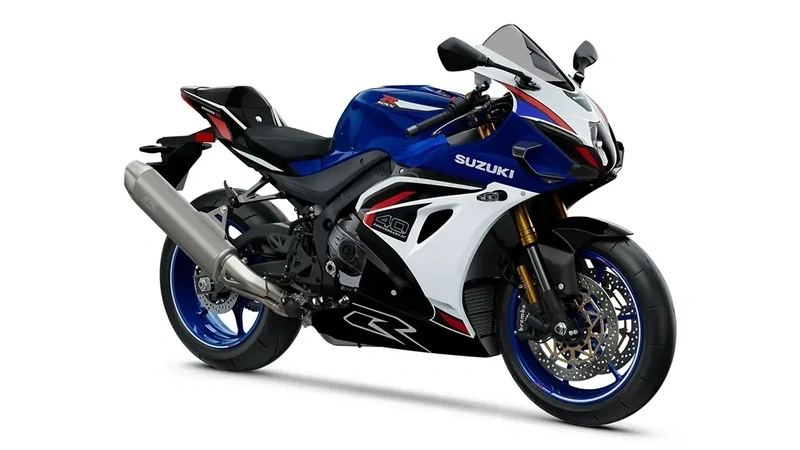
The GSX-R1000 is synonymous with performance, reliability and pure riding fun. Performance that has led to countless victories in production-based superbike, superstock and endurance races worldwide. That includes no fewer than 15 FIM Endurance World Championship titles since the models release in 2001.
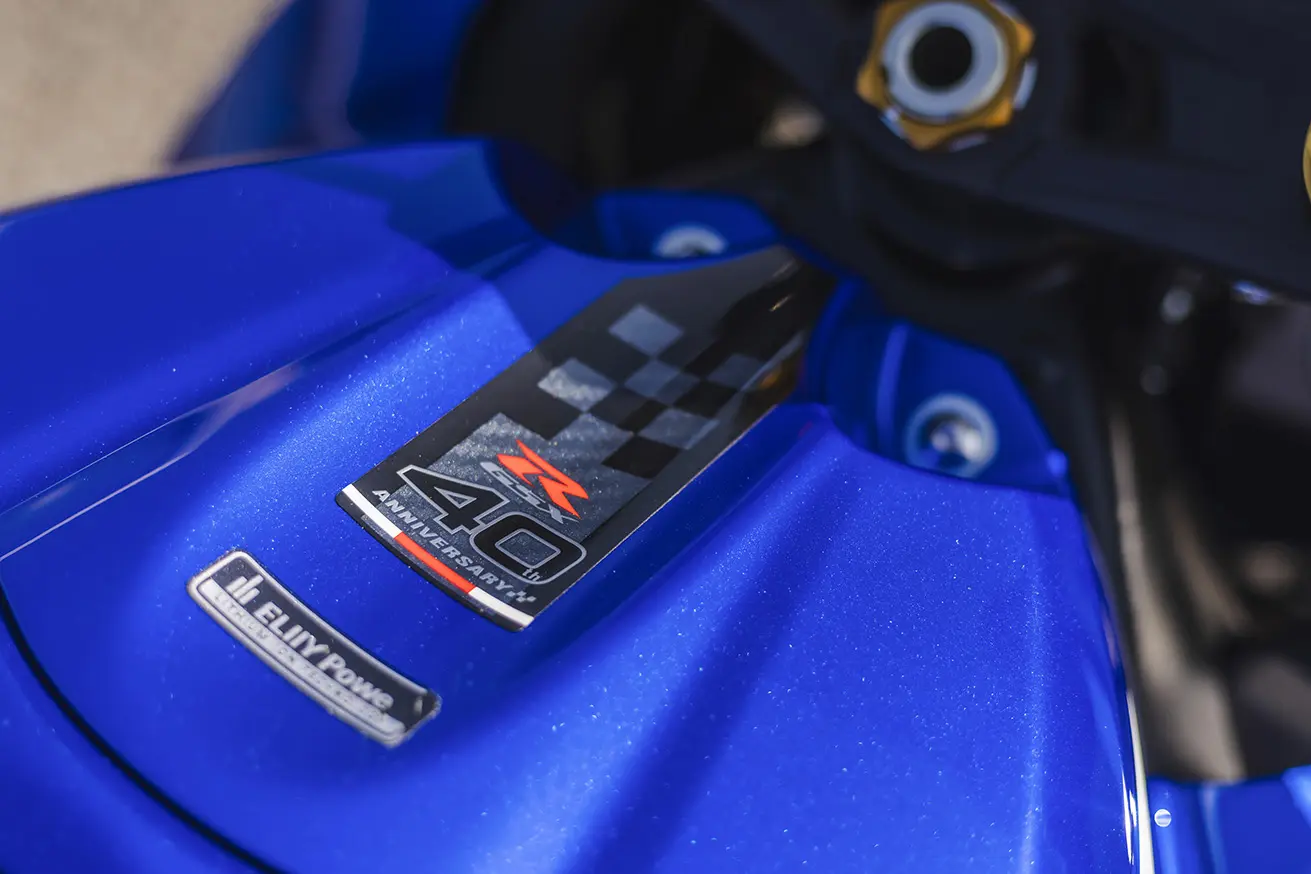
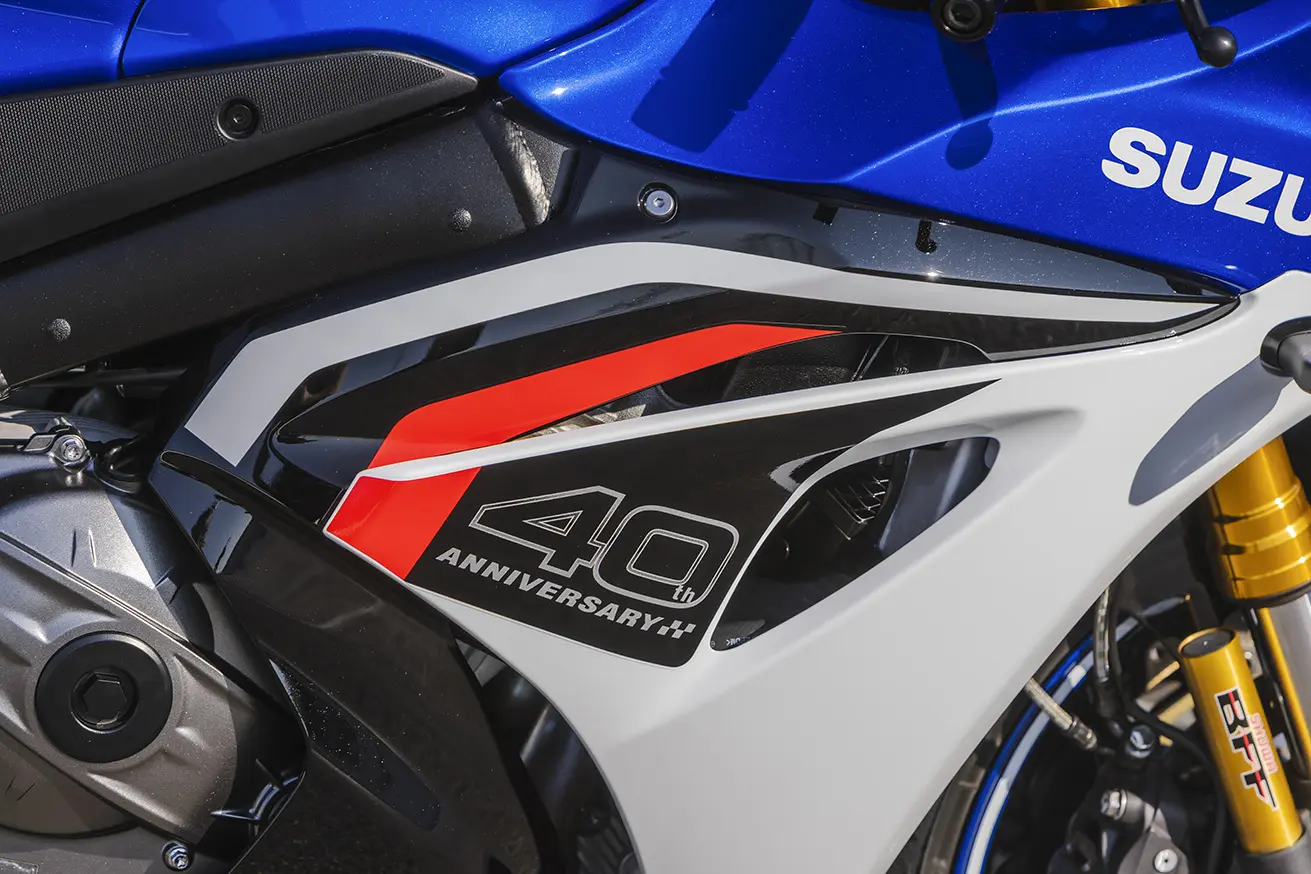
2025 marks the 40th anniversary of the GSX-R family and it has been close to a quarter of a century since the GSX-R1000 debuted, changing the sportbike class forever. In keeping ahead of the times and the rest of the pack, updates to the 40th Anniversary GSX-R1000 include those to comply with the latest emissions and noise regulations while maintaining the winning potential for which the GSX-R1000 is famed.
The heart of a race winner continues to beat in every GSX-R1000, with each beat delivering an invitation to ride the machine that is Designed to Perform, Built to Thrill.
Simple, compact and light, the centrifugally operated, the SR-VVT system is built into the intake cam sprocket and an adjacent guide plate.
It uses 12 steel balls and slanted grooves to rotate the sprocket and retard the intake valve timing at a pre-set rpm, adding significantly to high-rpm power without sacrificing mid-range and lower-rpm power. The beauty of the SR-VVT system is in its compact simplicity, light weight, reliability and seamless operation. Moreover, the system is built into existing parts, taking up no extra room in the engine, and the weight increase is minimal.
For the 40th Anniversary GSX-R1000R, the VVT sprocket shape was changed in conjunction with the adoption of a wider new cam chain.
The camshaft intake and exhaust lift curves were optimized to achieve both the development goal for engine output and compliance with Euro 5+ emissions regulations. The maximum lift has not been changed, but the overlap has been reduced. In addition, the wider new cam chain helps reduce friction loss, (assuming use of low viscosity oil in races and endurance races), and the cam sprockets have been reshaped accordingly.
The GSX-R1000R uses thin-wall, hollow camshafts operating light, F1-style pivoting finger followers. The lighter moving mass of these fingers allows maximum engine rpm and valve lift to be increased while improving valve response and maintaining accurate valve control. Each finger follower in the GSX-R1000R has a DLC coating to increase durability.
The shape of the fingers on both the intake and exhaust sides was changed and optimized to match the new cam profile. In addition, the exhaust valve diameter was changed from 24 mm to 25 mm, increasing exhaust efficiency and thereby contributing to increased intake air efficiency.
One primary injector mounted at a steep angle in each throttle body operates full-time when the engine is running. A second injector that operates at higher rpm also known as a Top Feed Injector (TFI) is mounted in the top of the air cleaner box, directly over each throttle bodys intake funnel. The TFI injector delivers additional fuel in an improved spray pattern designed to enhance combustion efficiency, throttle response and top-end power.
The new injector positioned in each throttle body replaces the previous ten-hole design with an eight-hole design, the new injectors help achieve compliance with Euro 5+ emissions standards. Additionally, the fuel pump was changed to increase fuel pressure.
The new 40th Anniversary GSX-R1000R throttle bodies are light and compact, with a larger bore (48 mm versus 46 mm) that helps enhance engine output. Each one has a single butterfly valve controlled by an advanced electronic engine management system, and each cylinder is fed by two ultra-fine-atomization eight-hole injectors.
Air is delivered to the throttle bodies via new single-stage funnels (velocity stacks). The funnels shape was a changed to contribute to improved output at high rpm.
Electronic throttle bodies help achieve the right balance between idling speed control and power output characteristics, while their design also contributes to complying with Euro 5+ emissions standards.
The new piston heads were reshaped to increase the compression ratio and accommodate the size of the increased exhaust valve diameter. The rib shape on the underside of the piston heads was changed. This reduces weight by 3 grams and, as high-rotation parts, delivers benefits in output, vibration, and durability. In addition, the piston circlips are made of a new material that improves durability.
An L-shaped upper compression ring is pushed out against the cylinder wall by combustion pressure, limiting blow-by and maximizing cylinder sealing. The oil ring features a chrome-nitride coating. Harder and smoother than chrome plating, this chrome-nitride coating helps reduce friction, increase durability and enhance cylinder sealing.
The pistons are carried by chrome-molybdenum steel connecting rods with a carburized surface treatment to increase strength. The connecting rods are, manufactured to design standards with rigorous tolerances to enhance reliability as a race-based motorcycle.
Each forged aluminium piston has short skirts, cutaway sides and a short, DLC coated wrist pin to reduce friction. The compression ratio is 13.8:1
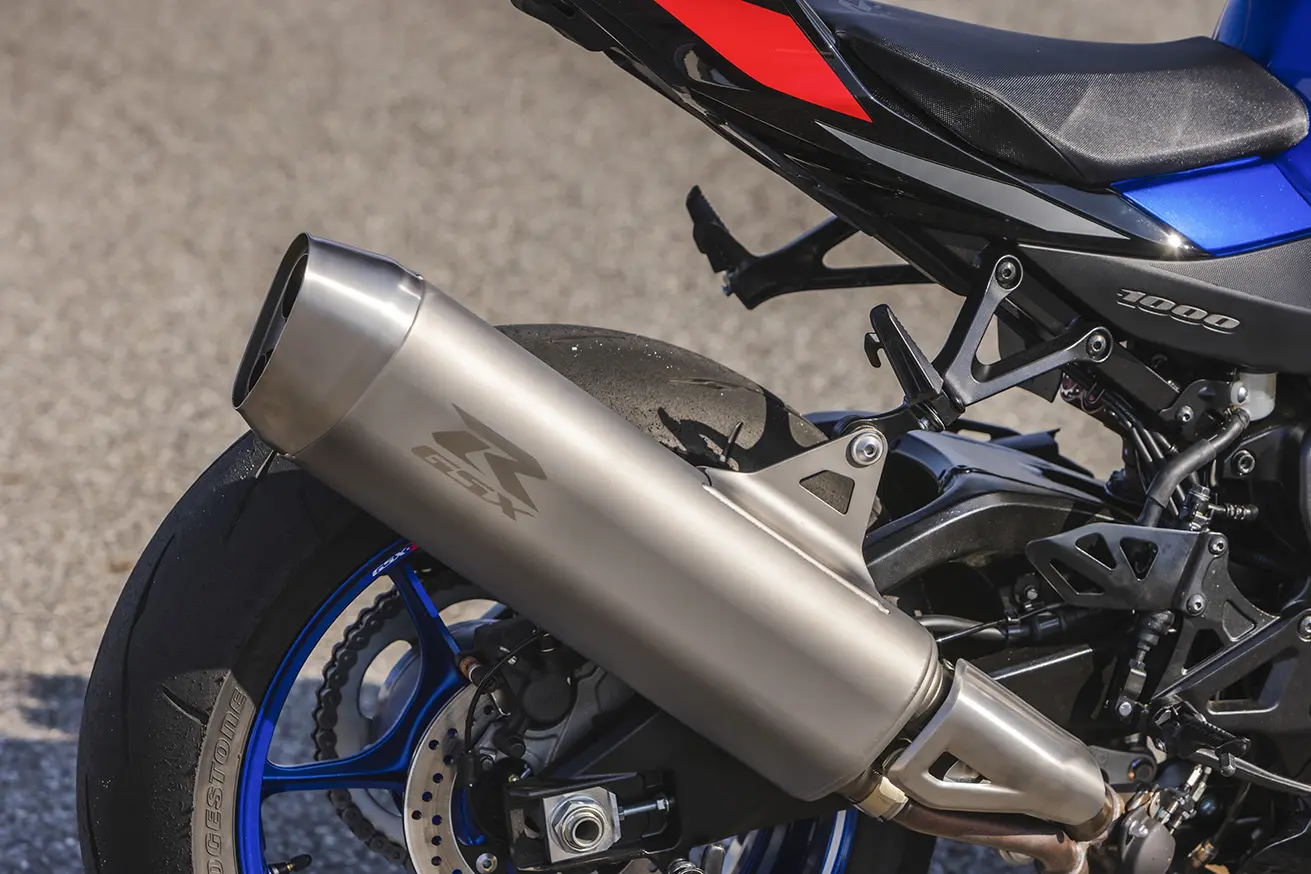
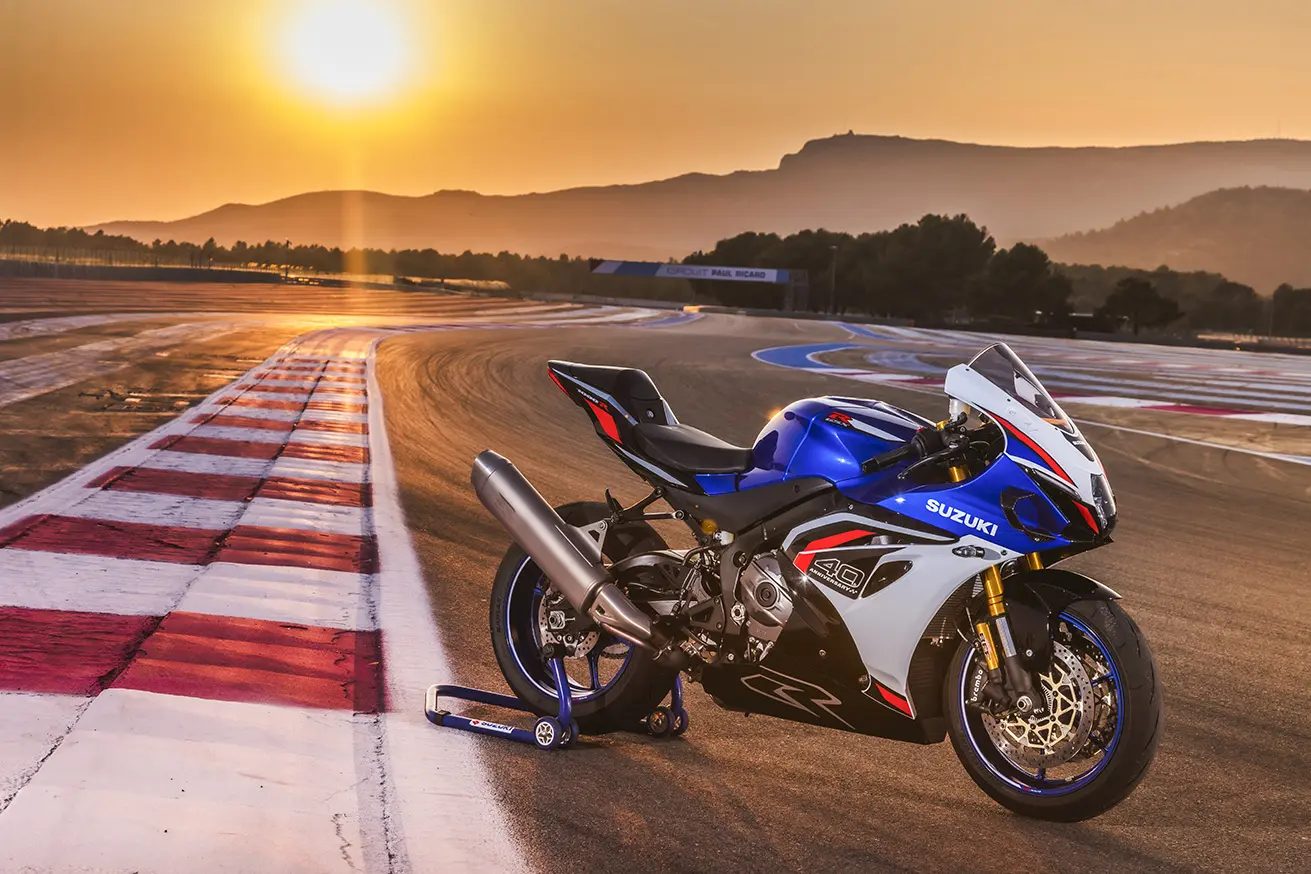
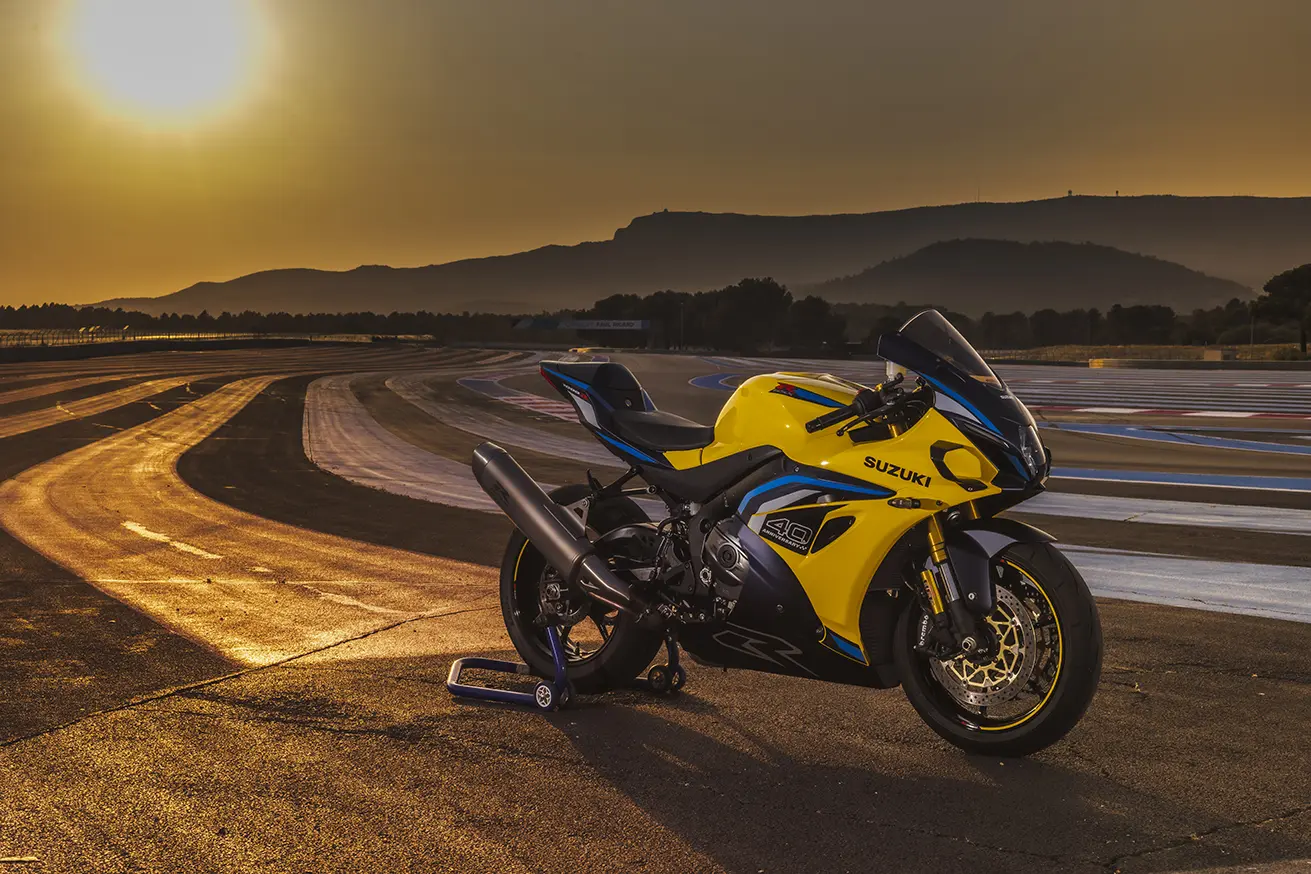
A number of updates were applied to the 4-2-1 exhaust system. Enlarging the diameter of the exhaust pipe contributes to maintaining output while complying with Euro 5+ emissions regulations.
In conjunction, a larger capacity elliptical (racetrack-shaped) catalytic converter in the collector is positioned closer to the engine to facilitate quicker warming, which helps improve its performance. A pair of O 2 sensors positioned in front and behind the catalytic converter help in complying with Euro 5+ emissions regulations.
Another benefit of the new layout is that it realized the design freedom to make the muffler body more compact, reducing its capacity from 8.3 to 5.5 liters while still retaining performance on par with the previous design.
The shot-blasted titanium muffler features a slim and stylish design that reflects the model's tough image.
The slipper clutch partially disengages when downshifting to decelerate to mitigate the effect of engine braking. By helping to prevent the rear tire from hopping and providing smoother deceleration, this function enables the rider to shift down with greater confidence and maintain better control.
SCAS works harmoniously with the Bi-directional Quick Shift system to deliver an additional benefit to the systems clutch-free shifting.
The assist function leverages precision-engineered ramps to force the clutch boss and pressure plate together and efficiently transfer torque to the rear wheel under acceleration, all while using softer clutch springs. One benefit is a light touch to clutch lever operation that reduces fatigue of the left hand in situations that require frequent clutch lever operation.
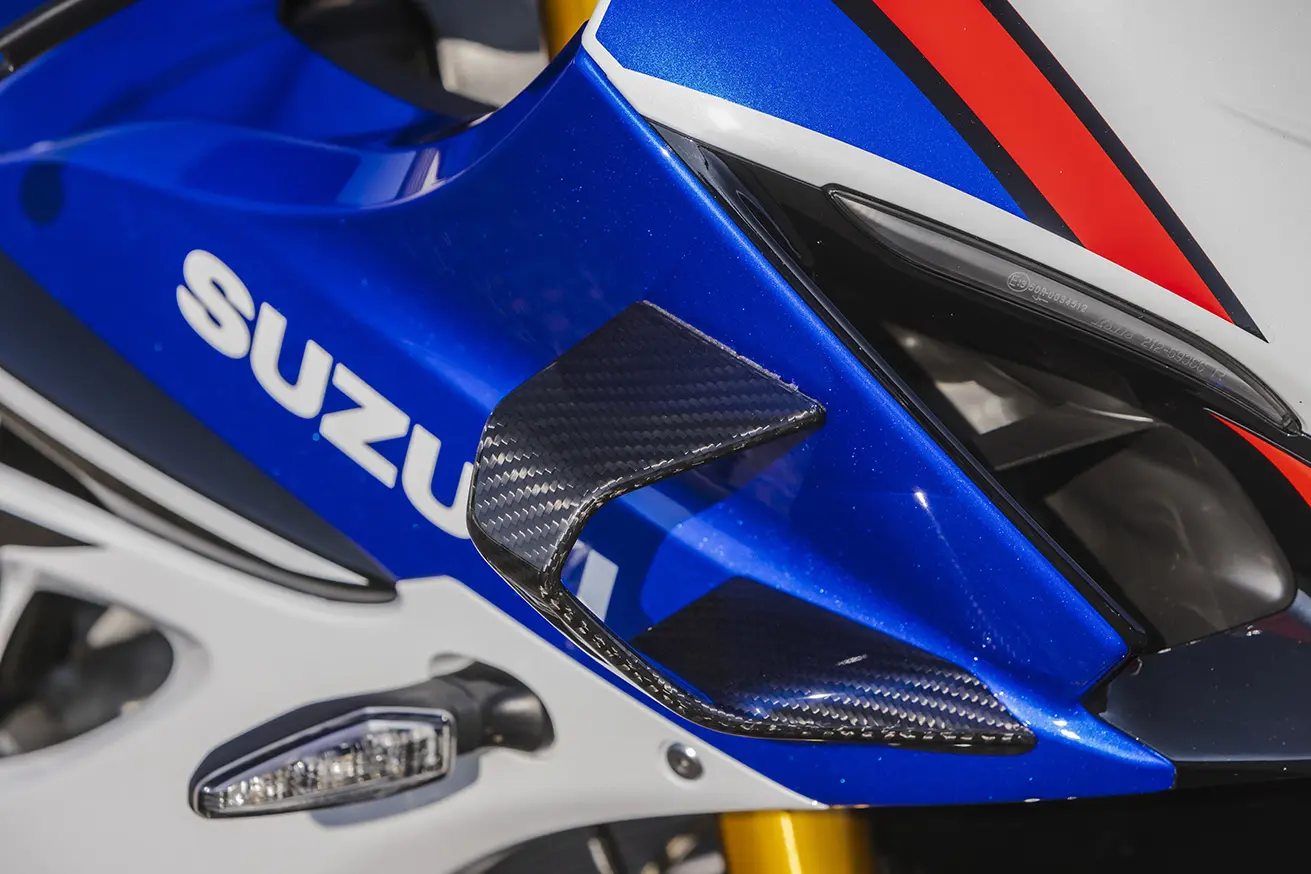
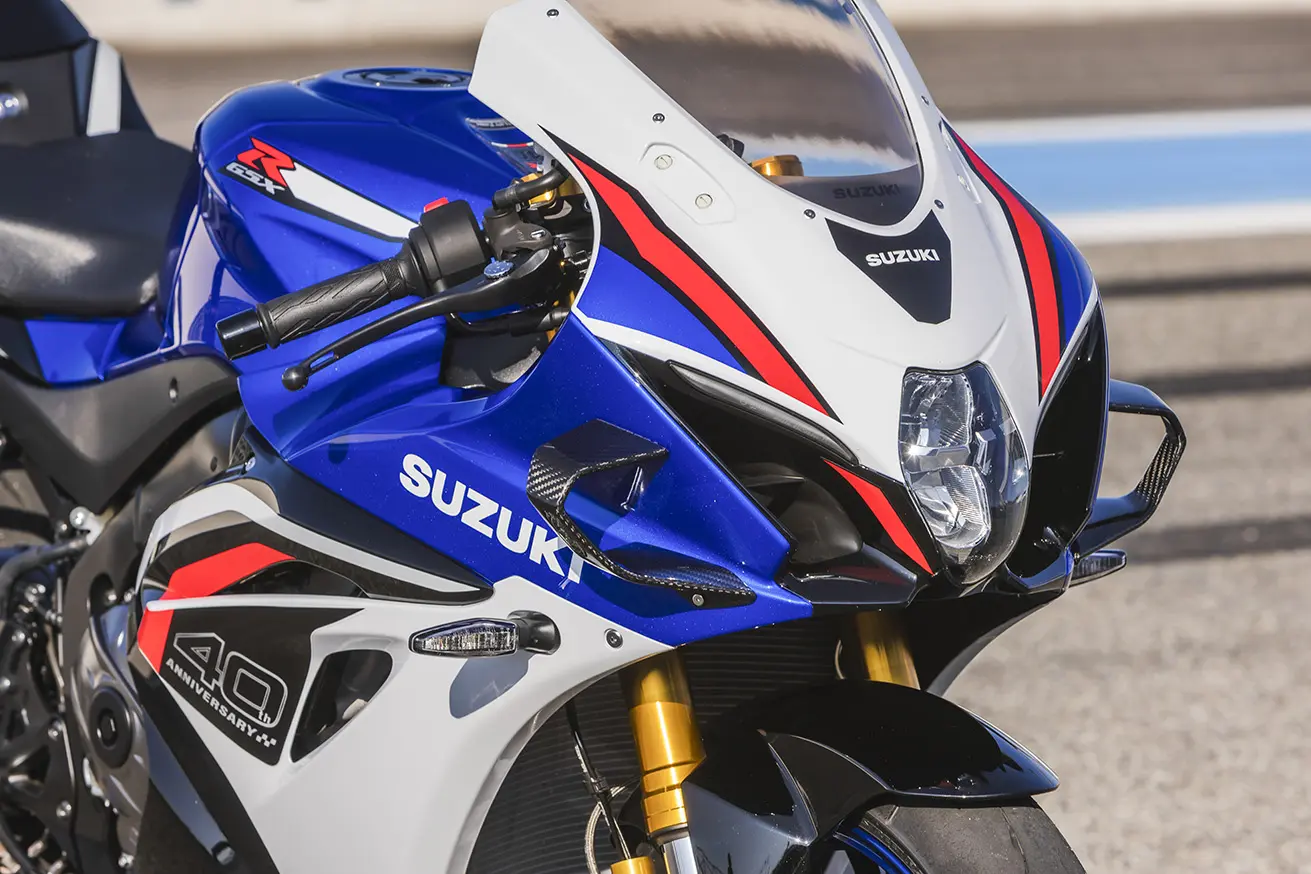
New winglets added to the front cowling direct airflow and generate downforce at high speeds to enhance stability.
Made of dry carbon produced in Japan, the size and shape of the winglets was developed through a long process of experimental builds and thorough test runs to achieve the optimum lift effect without making handling feel heavy.
The core material upon which the winglets are formed has the characteristic of burning out after sintering, thus realizing the finished parts hollow structure. The quality stands head and shoulders above wet carbon products, which are generally made from relatively inexpensive GFRP products with carbon attached.
These winglets adopt the same basic design as those used by Team Suzuki CN Challenge when competing in the Suzuka 8 Hours Endurance Race 2024.
Compact, light and rigid, the twin-spar aluminium frame is built to deliver nimble handling and great road holding ability.
Braced on both sides, the sturdy aluminium swingarm contributes to great road holding ability and provides the strength to withstand the demands of sporty runs on the road or the track.
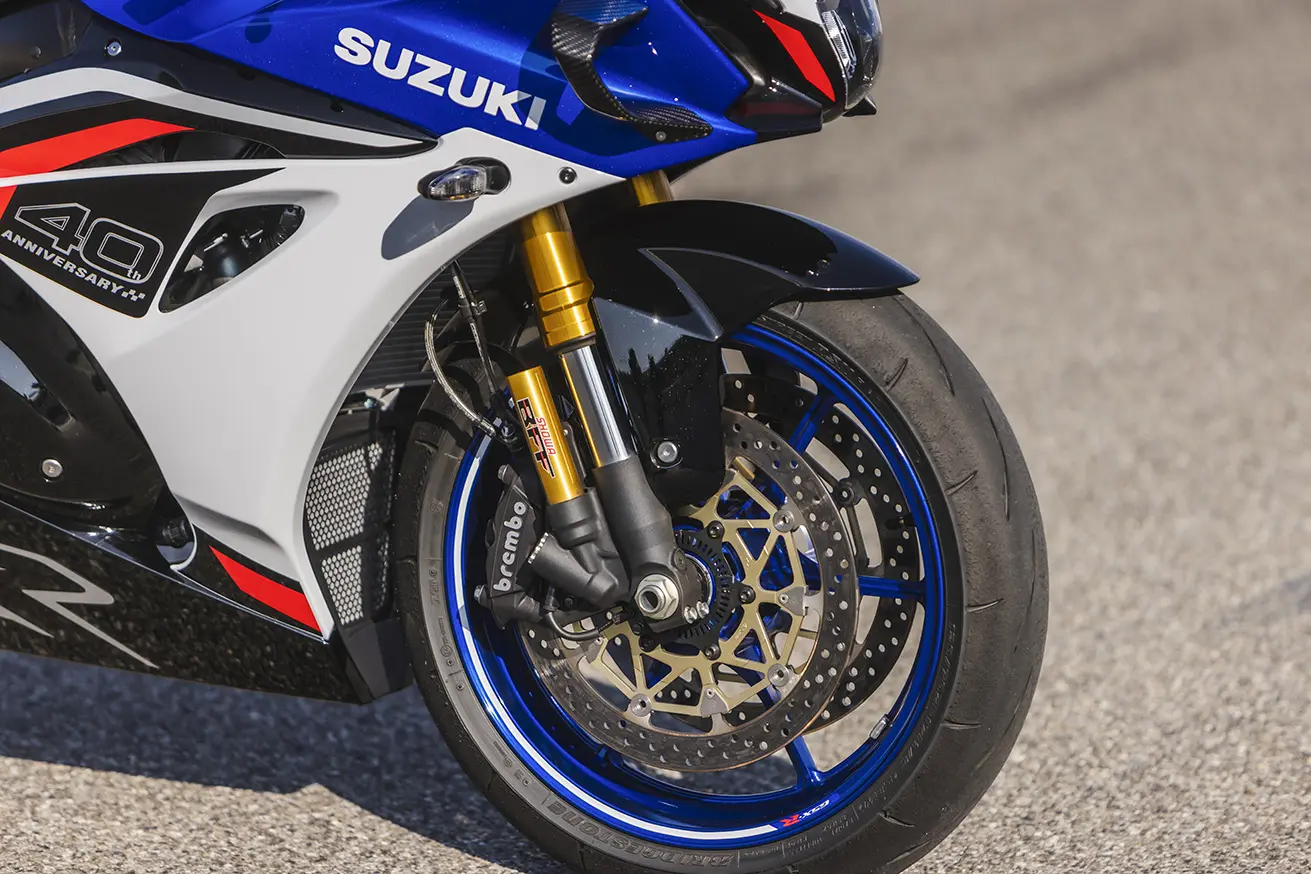
The lightweight, six-spoke cast aluminium wheels contribute to positive handling and sporty performance.
They are shod with the latest generation of Bridgestone BATTLAX RACING STREET RS11 radial tires (120/70ZR17M/C (58W) at the front; 190/55ZR17M/C (75W) at the rear), have which earned a good reputation worldwide for delivering consistent performance and durability across a wide range of ambient conditions.
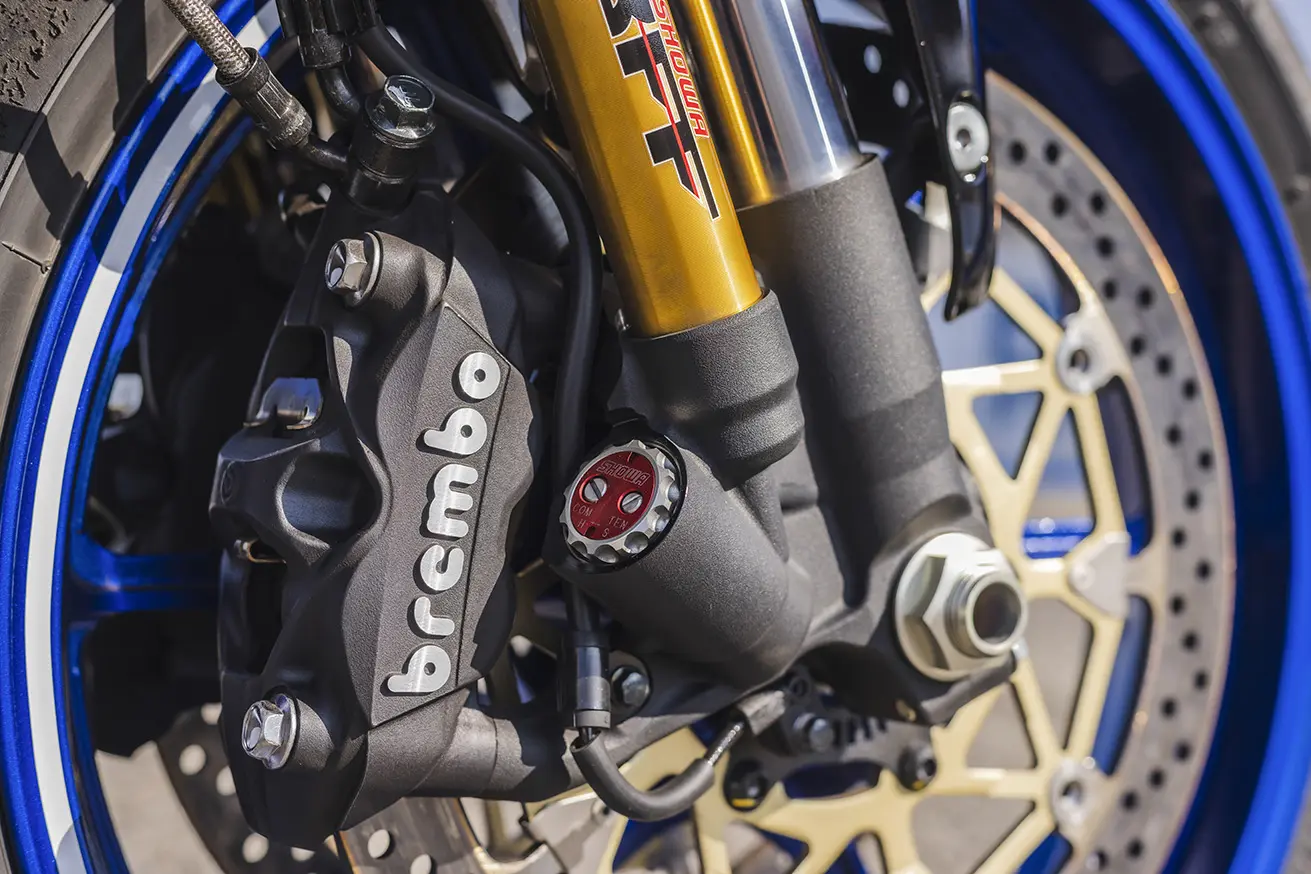
The GSX-R1000R uses radial-mount Brembo monoblock front brake callipers. Each calliper has four opposed ø32mm pistons acting on a ø320mm floating-mount disc for strong stopping power. A single hydraulic disc provides stopping power to the rear wheel.
Each disc features a hybrid mounting system using a 50/50 combination of 5 spring-loaded floating pin mounts and 5 Brembo T-drive floating mounts. The T-drive mounts are lighter than spring-loaded floating pin.
Brembo T-drive discs can produce an audible rattle under certain conditions. Spring-loaded pin mounts are slightly heavier and produce a smaller contact area but are quieter. Using a combination of T-drive and pin mounts reduces rattle and requires fewer mounting points.
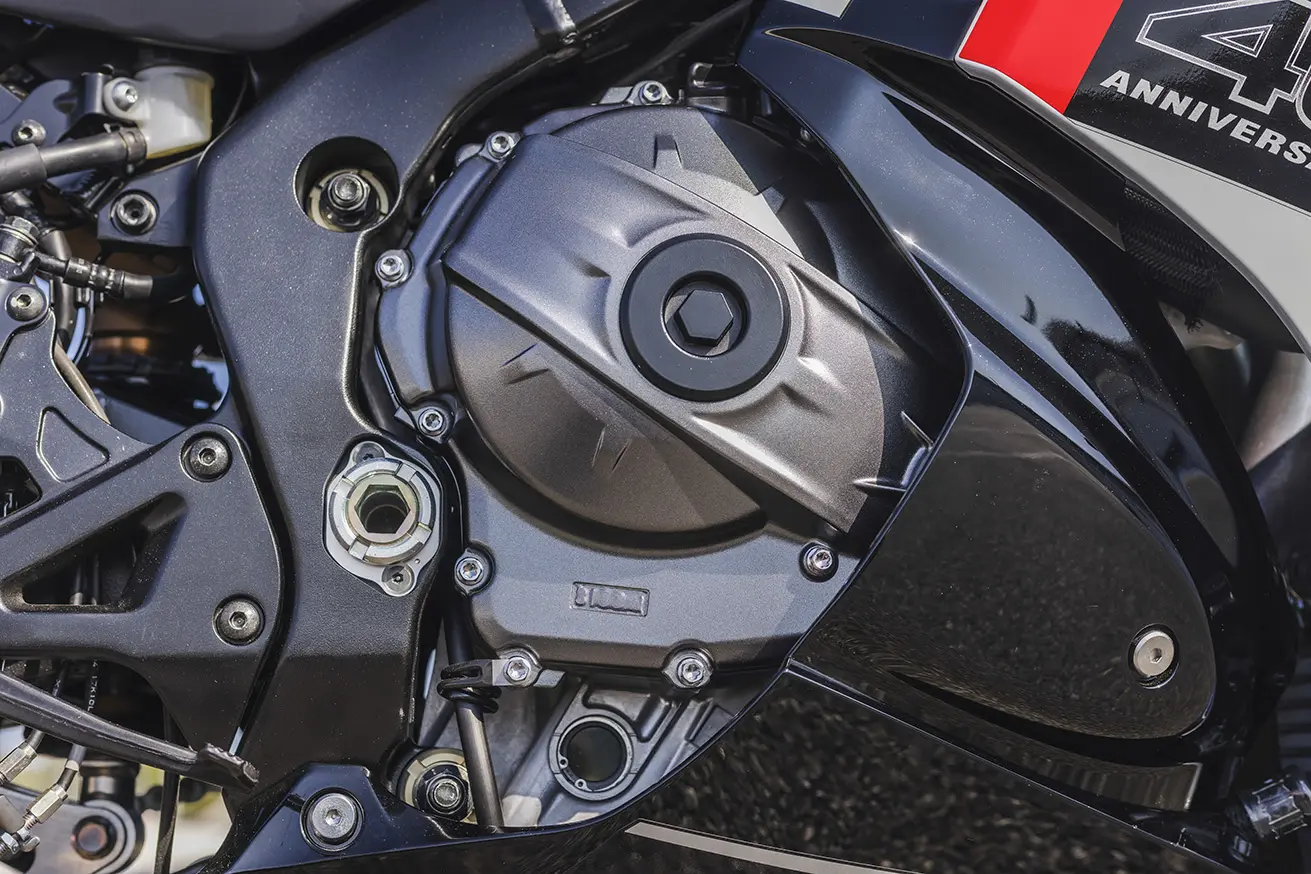
The 40th Anniversary Suzuki GSX-R1000R features an updated, high-performance 999.8cm3 liquid-cooled DOHC inline-four engine. This engine is engineered for optimal performance and reliability in all riding conditions, from daily commutes to competitive track racing, maintaining its strong reputation in endurance racing.
Key updates include more linear torque delivery across the operating range and compliance with the latest emissions and noise regulations. To achieve improved combustion efficiency, Suzuki thoroughly revised all intake and exhaust components, from the intake funnels to the muffler.
The compact, light-weight chassis provides quick response and agility. It is designed to increase the riders confidence in RUN, TURN, STOP performance on the road and on the racetrack.